FAQ about Purchasing Tungsten Wire
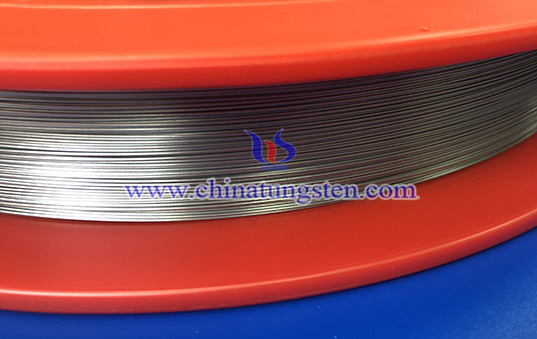
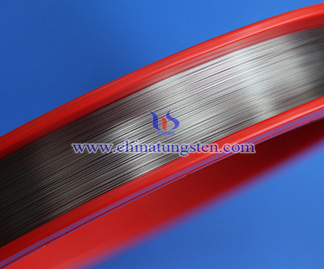
CTIA summarizes Frequently Asked Questions (FAQ) on tungsten wire procurement based on supply experience and customer feedback. As a high-melting-point metal, tungsten wire performance depends on specification selection, processing conditions, and application matching. The following answers key procurement questions.
1.What purity of tungsten wire should I choose?
Tungsten wire purity of W≥99.95% is suitable for most applications, including heating elements, vacuum components, and structural uses. For vacuum evaporation, electron emission, and semiconductor processing, higher purity is preferred to minimize the impact of impurities (Fe, Ni, O, C) on emission stability, evaporation uniformity, and service life. Purity selection should be based on service environment (air, vacuum, or protective atmosphere), operating temperature, and electrical load rather than maximum purity alone. CTIA can recommend appropriate tungsten wire purity to balance performance and cost.
2.How should tungsten wire diameter be selected?
Tungsten wire diameter selection depends on electrical and thermal requirements. Smaller diameters provide higher resistance and more concentrated heating under the same current but lower mechanical strength. Larger diameters allow higher current capacity but slower heating response. Selection is typically based on current density (A/mm²), then adjusted according to cooling conditions, installation space, and structural constraints. Diameter also influences evaporation rate and thermal stability in high-temperature applications. CTIA support includes diameter selection based on operating conditions.
3.How should tungsten wire length be selected?
The correct tungsten wire length depends not only on equipment dimensions but also on thermal expansion and fixing methods. Tungsten wire expands at high temperatures, so insufficient length allowance may cause stress, deformation, or breakage during heating, while excessive length may lead to instability or slack. In design, tungsten wire length should be determined based on fixing positions, tension methods, and operating temperature. For coiled or shaped structures, length also affects resistance and heating distribution. CTIA can recommend appropriate tungsten wire length based on your equipment design.
4.Can tungsten wire be customized?
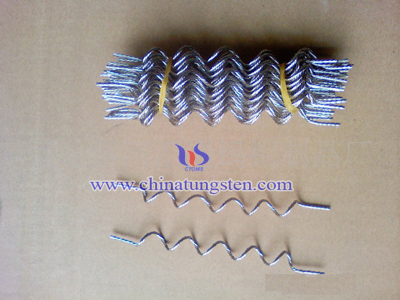
Yes, tungsten wire can be customized in terms of diameter, length, shape (such as coil, U-shape, wave, or frame), and surface condition. Different tungsten wire shapes serve different functions; for example, coiled tungsten wire is often used in heating elements to improve efficiency, while straight tungsten wire is commonly used for electronic or support purposes. To ensure proper design, parameters such as environment (vacuum or air), operating temperature, electrical conditions, and installation method should be clearly specified. CTIA offers full-process manufacturing and can support custom tungsten wire design.
5.How does tungsten wire resistance change during operation?
The resistivity of tungsten wire at 20°C is approximately 5.6×10⁻⁸ Ω·m, and it increases significantly with temperature, showing a typical positive temperature coefficient. During operation, tungsten wire resistance may increase several times from the cold state to high temperature. This means that at startup, the resistance is low and current is high, which may cause temporary overheating, while at stable temperatures, resistance increases and current stabilizes. Therefore, current limiting or soft-start control is usually required. CTIA can provide reference data for tungsten wire resistance changes based on operating temperature.
6.How high a temperature can tungsten wire handle?
Tungsten wire has a melting point of approximately 3422°C. It can operate stably above 2000°C for long periods in vacuum or inert gas environments. However, oxidation becomes significant above about 800°C in air, forming tungsten oxide (WO₃) and causing material loss, which can eventually lead to wire thinning or breakage. Therefore, the allowable temperature of tungsten wire depends on the operating atmosphere. CTIA can recommend suitable temperature ranges for tungsten wire based on your application conditions.
7.How should current density be selected for tungsten wire?
Current density (A/mm²) should be selected based on tungsten wire diameter, length, cooling conditions, and operating temperature. If the current density is too high, it may cause local overheating, accelerate oxidation, or lead to failure; if too low, the required temperature may not be reached. There is no fixed value for tungsten wire current density, and it should be optimized for each application. CTIA can help determine a suitable current density range for stable tungsten wire operation.
8.What tolerance can tungsten wire achieve?
Tungsten wire tolerance depends on diameter and manufacturing process. Standard industrial tungsten wire can achieve stable tolerance control, while fine tungsten wire can achieve higher precision through advanced drawing processes. In precision applications, tungsten wire dimensional consistency is critical for uniform resistance and heating performance, so stricter tolerances are required. CTIA can provide different tolerance levels based on application needs.
9.How is the quality of tungsten wire assessed?
Tungsten wire quality is evaluated based on surface condition (uniformity, absence of cracks or scratches), dimensional consistency, cleanliness, and in-service performance. High-quality tungsten wire exhibits stable heating behavior and long service life. Internal microstructure uniformity also plays an important role in performance. CTIA ensures consistent quality through controlled raw materials, optimized processes, and strict inspection systems.
10.Will there be differences between batches of tungsten wire?
Under controlled production conditions, batch-to-batch variation in tungsten wire is minimal but may still be influenced by raw material purity, processing methods, and equipment conditions. For critical applications, it is recommended to use tungsten wire from the same batch within a project to reduce variability. CTIA manages batch consistency through standardized production and traceability systems.
11.Do I need to clean tungsten wire before use?
Tungsten wire can be used directly for general applications. However, in vacuum evaporation, electron emission, or semiconductor applications, high cleanliness is required. Contaminants such as oil or particles may cause local reactions or uneven heating at high temperatures. In such cases, high-cleanliness tungsten wire or cleaning is recommended. Common methods include ethanol wiping or ultrasonic cleaning, while avoiding recontamination. CTIA can supply tungsten wire with different cleanliness levels.
12.What happens if tungsten wire is contaminated?
Surface contamination on tungsten wire can form low-melting-point reaction zones at high temperatures, leading to local melting damage or structural failure. It may also affect electron emission performance and evaporation uniformity. Even small amounts of contamination can have noticeable effects in precision applications. Therefore, cleanliness control is essential during procurement and use. CTIA applies clean handling and packaging to minimize contamination risks.
13.What forms of tungsten wire can you supply?
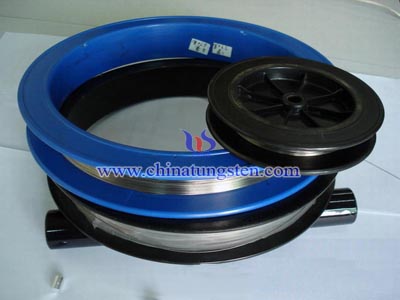
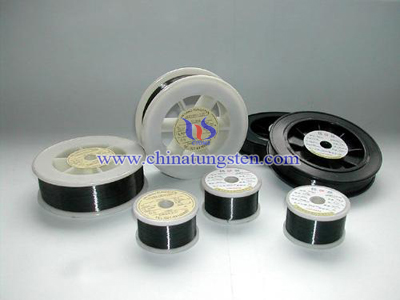
Tungsten wire is available in multiple forms, including straight wire, coiled wire, spool-wound wire, and customized shapes. Straight tungsten wire is suitable for precision cutting and installation; coiled tungsten wire is commonly used in batch production and automated equipment; spool-wound tungsten wire supports continuous feeding systems; and shaped tungsten wire can be customized for specific equipment requirements, such as spiral or corrugated designs. Selecting the right form improves efficiency and usability.
14.How is tungsten wire packaged?
Tungsten wire packaging depends on its form and size. Straight tungsten wire is typically protected with tubes or trays to prevent bending; coiled and spool-wound tungsten wire is packaged on reels for smooth unwinding and may include moisture protection; customized shapes are fixed with dedicated supports to maintain structure. Moisture-proof packaging is commonly used to prevent oxidation and contamination.
15.What is the Minimum Order Quantity (MOQ) for tungsten wire?
The minimum order quantity depends on tungsten wire specifications and processing requirements. Standard tungsten wire is usually available in small quantities or samples for testing and development. Customized tungsten wire may require larger quantities to ensure production efficiency. MOQ can be adjusted based on project needs.
16.What is the lead time for tungsten wire orders?
Lead time depends on tungsten wire type and processing requirements. Standard tungsten wire is often in stock and can be shipped within a few days to one week. Customized tungsten wire typically requires several weeks to about one month, depending on production complexity. Providing detailed specifications in advance helps ensure timely delivery.
17.Can you provide long-term stable supply of tungsten wire?
Yes, tungsten wire can be supplied consistently under stable production conditions. Strict control of raw materials, drawing processes, heat treatment, and inspection ensures consistent performance across batches. CTIA can also support long-term supply through specification management and inventory planning.
18.How can I select the right tungsten wire?
To select the right tungsten wire, factors such as operating temperature, atmosphere, electrical load, structural design, and installation conditions must be considered. For example, high-temperature applications require good creep resistance, while vacuum environments benefit from high-purity tungsten wire. Sample testing or small-batch trials are recommended to verify performance before large-scale use.
19.Can tungsten wire be used in air?
Tungsten wire can be used in air for short periods, but at high temperatures it will oxidize, leading to discoloration, embrittlement, and eventual failure. Therefore, it is not suitable for long-term high-temperature use in air. Vacuum or protective atmospheres are recommended to ensure performance and service life.
20.What information is required to order tungsten wire?
To support correct selection and quotation, you should provide specifications of tungsten wire including diameter, length, shape, operating temperature, working environment (vacuum, air, inert gas), current load, and quantity. Additional details such as installation structure or heating power may also be required for special applications. Providing complete information helps avoid mismatches and ensures optimal performance.
For any inquiry, please contact tungsten wire manufacturer: CTIA GROUP
Email: sales@chinatungsten.com
Tel: 0086 592 5129696 / 0086 592 5129595
Website: www.tungsten.com.cn
WeChat:
Related Products: