Medical Tungsten Wire
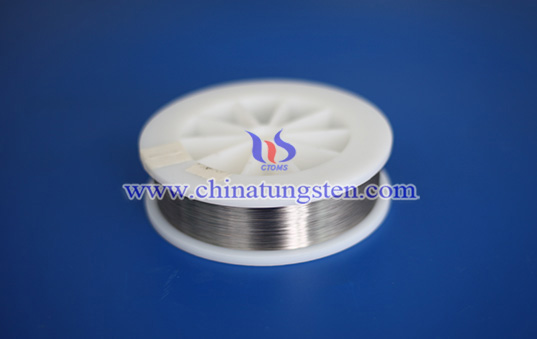
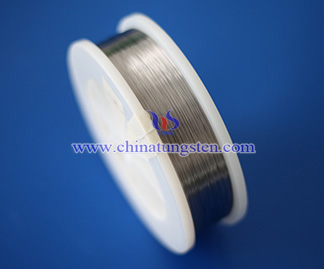
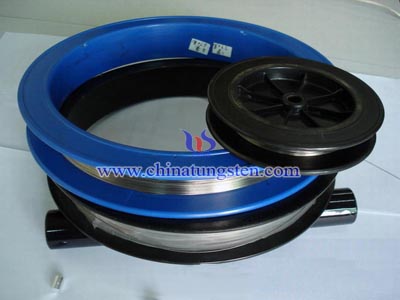
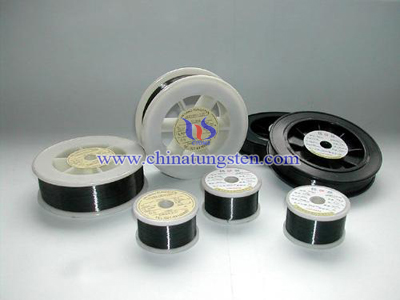
CTIA's medical tungsten wire refers to tungsten wire used in medical applications, which is mainly used as structural components and radiopaque elements in micro medical devices. These applications require high dimensional accuracy, mechanical performance, and operational stability, while also demanding clear imaging visibility. Tungsten has a density of about 19.3g/cm³ and a high linear attenuation coefficient for X-rays, enabling clear radiographic imaging. It helps maintain structural stability by minimizing dimensional change under body temperature and operating conditions, due to its low coefficient of thermal expansion of about 4.5×10⁻⁶K⁻¹, while its melting point is about 3422°C. Therefore, tungsten wire is used in guidewires, positioning structures, and radiopaque markers.
Dimensional accuracy directly affects device passability and handling performance. CTIA's medical tungsten wire ranges from millimeter scale down to below φ0.1mm, with some applications in the φ10–50μm range. Diameter tolerance is typically controlled within ±1–5μm. Roundness and surface roughness Ra≤0.2–0.5μm influence insertion resistance and operational consistency. Through multi-pass cold drawing and intermediate annealing, work hardening can be controlled to achieve stable dimensional accuracy and continuity.
The material is subjected to repeated bending and localized stress during use, requiring adequate bending strength and fatigue resistance. The tensile strength of tungsten at room temperature is typically in the range of 800–1500MPa, depending on processing condition and diameter.
Radiopacity is determined by material density and atomic number. Tungsten, with an atomic number of 74, has strong X-ray absorption capability and is suitable for imaging positioning. Imaging performance depends on wire diameter, length, and structural design, requiring a balance between imaging contrast and device flexibility.
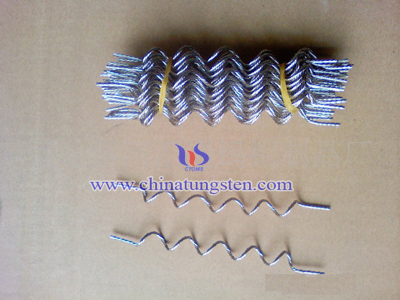
Different medical devices emphasize different performance aspects. Guidewires require a balance between flexibility and pushability, radiopaque components focus on density and dimensional accuracy, and support structures emphasize stiffness and dimensional stability. CTIA GROUP recommends that material purity, dimensional tolerance, surface condition, and microstructure be selected according to specific application requirements.
The application of medical tungsten wire is based on the combined effects of dimensional accuracy, mechanical performance, and radiopacity, along with process control over microstructure and surface condition. Selection should focus on matching relevant parameters to achieve structural stability and consistent performance.
For any inquiry, please contact tungsten wire manufacturer: CTIA GROUP
Email: sales@chinatungsten.com
Tel: 0086 592 5129696 / 0086 592 5129595
Website: www.tungsten.com.cn
WeChat:

Related Products: