CTIA's Tungsten Wire in High-Temperature Measurement and Sensors
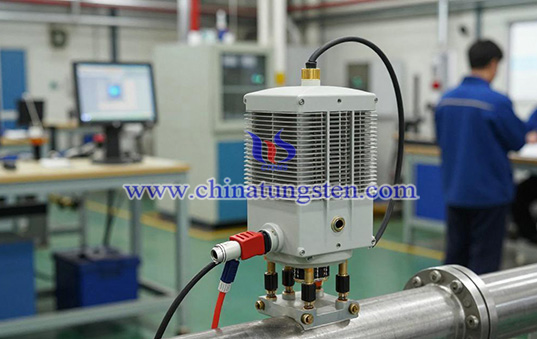
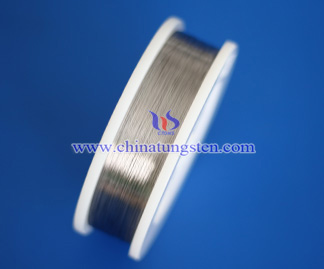
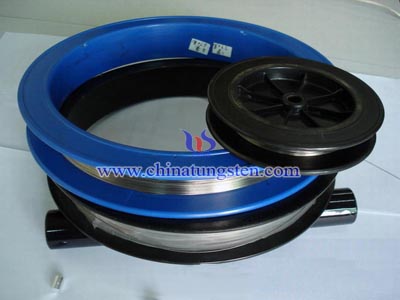
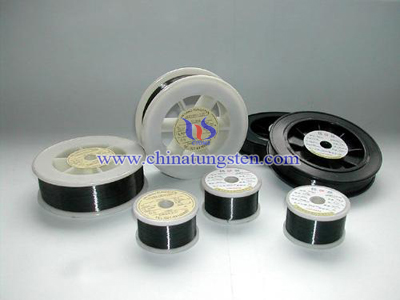
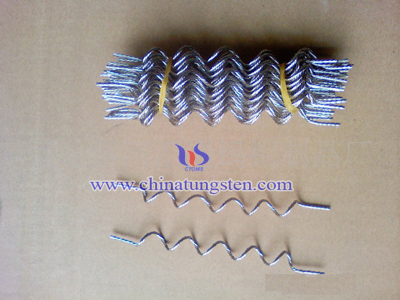
CTIA's tungsten wire is used in high-temperature measurement and sensors as a sensing element or structural conductor, typically operating in high-temperature, vacuum, or protective atmospheres. Under these conditions, it must maintain a stable resistance response under continuous heating and electrical load while limiting deformation and evaporation to ensure signal continuity and repeatability. With predictable resistivity variation, minimal dimensional change, and low evaporation at elevated temperatures, tungsten wire enables reliable long-term operation in applications such as tungsten-rhenium thermocouples, resistance thermometry, vacuum sensors, gas sensors, and infrared temperature measurement.
1. CTIA's Tungsten Wire for Tungsten-Rhenium Thermocouples
Tungsten-rhenium thermocouples are used for temperature measurement above 1600°C, typically in vacuum furnaces or inert atmospheres, where stable thermoelectric output is required. The relationship between temperature and thermoelectric potential depends on material composition and structural stability, and any evaporation or structural change may cause signal drift. Tungsten-rhenium wire shows stable thermoelectric behavior and high-temperature structural stability. CTIA improves material consistency through composition control and processing optimization, supporting stable thermoelectric output and repeatable measurements in high-temperature furnaces and research applications.
2. CTIA's Tungsten Wire for High-Temperature Resistance Thermometry
High-temperature resistance measurement relies on the relationship between resistance and temperature, where current passing through the conductor generates a measurable signal. Measurement accuracy depends on stable resistance variation and dimensional stability at high temperature. Tungsten wire exhibits continuous resistance change and minimal dimensional variation, supporting consistent signal output. CTIA controls diameter precision and structural uniformity to stabilize resistance response, enabling reliable performance in high-temperature resistance sensing applications.
3. CTIA's Tungsten Wire for Vacuum Sensors
Vacuum measurement devices often use thermal conductivity or ionization principles, where tungsten wire functions as a heating or electron emission element. Under operation, components work continuously in low-pressure environments, generating signals through temperature or electron variation. Material evaporation rate and stability directly affect measurement accuracy and service life. Tungsten wire shows low evaporation tendency and stable resistance behavior under vacuum, supporting stable signal output. CTIA enhances performance through purity control and surface treatment, enabling stable operation in vacuum measurement systems.
4. CTIA's Tungsten Wire for High-Temperature Gas Sensors
High-temperature gas sensors are used to monitor gas composition in combustion or industrial processes, requiring continuous operation in high-temperature and complex atmospheres. Changes in atmosphere affect heat transfer and surface reactions, influencing signal output, so materials must maintain stable thermal response and structural integrity. Tungsten wire shows minimal dimensional change and stable electrical response at high temperature, functioning as a heating or sensing element. CTIA controls microstructure and processing consistency to maintain stable output under varying atmospheres.
5. CTIA's Tungsten Wire for Infrared Temperature Sensors
Infrared temperature measurement systems rely on thermal radiation, requiring stable radiation or reference sources for calibration. Radiation intensity depends on material temperature and surface condition, and changes at high temperature can affect measurement accuracy. Tungsten wire acts as a stable radiation source with continuous emission characteristics and minimal structural change. CTIA ensures stable radiation output through purity and surface control, supporting calibration and reference functions in infrared measurement systems.
6. CTIA's Tungsten Wire for Electron Emission Sensors
Electron emission sensors rely on thermionic emission, where materials are heated to release electrons for signal generation. Emission stability depends on structural integrity and surface condition at high temperature. Tungsten wire provides stable electron emission and resists performance degradation caused by evaporation or structural instability. CTIA controls surface quality and processing conditions to maintain consistent emission behavior, supporting stable operation of electron emission sensor systems.
7. CTIA's Tungsten Wire for High-Temperature Experimental Measurement
High-temperature experiments require components to operate under repeated heating and cooling cycles while maintaining consistent measurement signals. Thermal cycling affects material structure and electrical properties, requiring dimensional stability and repeatable response. Tungsten wire exhibits minimal deformation and repeatable resistance behavior under high-temperature cycling. CTIA ensures consistency through precision processing and microstructure control, supporting repeatable results in research and experimental measurements.
High-temperature measurement and sensor applications require materials to withstand continuous high temperature, electrical load, and environmental variation. Tungsten wire supports signal generation and transmission through stable resistance behavior, low evaporation tendency, and structural stability. While response mechanisms vary across measurement methods, consistent material properties remain critical. CTIA ensures stable performance across these applications through raw material control and process optimization.
For any inquiry, please contact tungsten wire manufacturer: CTIA GROUP
Email: sales@chinatungsten.com
Tel: 0086 592 5129696 / 0086 592 5129595
Website: www.tungsten.com.cn
WeChat:

Related Products: