Heating Tungsten Wire
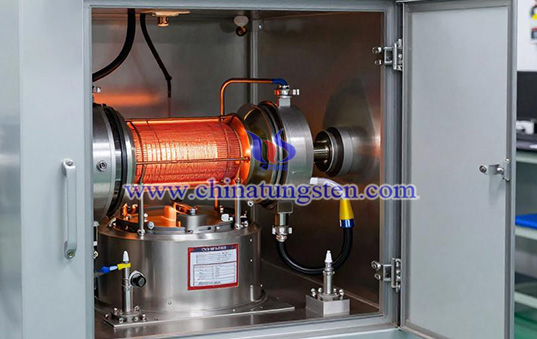
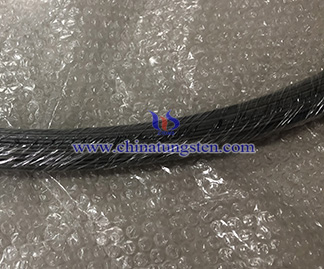
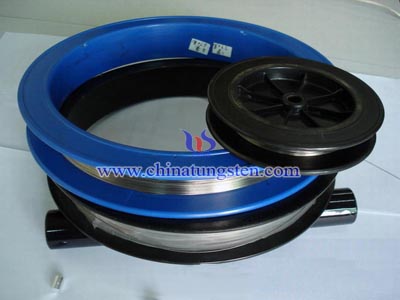
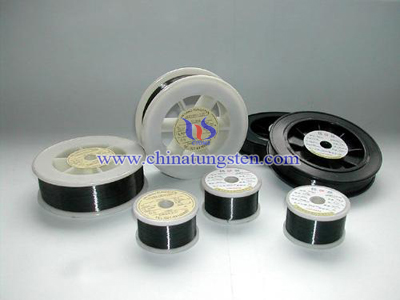
CTIA's heating tungsten wire refers to tungsten wire used as a resistance heating element in applications such as vacuum furnaces, evaporation coating equipment, and various high-temperature devices. These applications typically operate within 1800–3000°C and under high vacuum or inert atmospheres approximately 10⁻³–10⁻⁵Pa, requiring high structural stability, long service life, and consistent heating performance. Tungsten has a melting point of about 3422°C, a vapor pressure of about 10⁻³–10⁻²Pa in the range of 2500–3000K, and a low coefficient of thermal expansion of about 4.5×10⁻⁶K⁻¹, enabling it to maintain structural stability under high-temperature conditions and making it suitable for heating applications.
Heating is achieved through resistive heating. When energized, tungsten wire converts electrical energy into heat. Its resistivity changes continuously with temperature, allowing stable heating and controllable power output. Heating behavior is closely related to current density, wire diameter, and structural design, which need to be matched to equipment power and thermal field requirements.
The material undergoes evaporation and creep at elevated temperatures. Evaporation reduces cross-sectional area, affecting resistance and heat distribution, while creep may cause sagging or deformation, impacting heating uniformity. Tungsten has a relatively low evaporation rate at high temperatures. By introducing K-Al-Si doping systems, potassium bubble rows are formed within the material, restricting grain boundary movement and suppressing lateral grain growth. This maintains a fibrous grain structure and slows deformation at high temperatures.
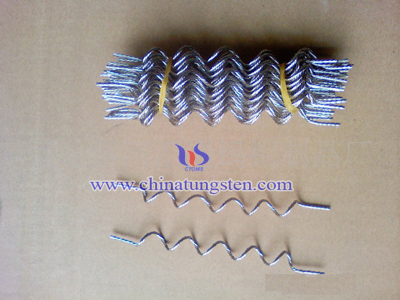
Structural design directly affects heating efficiency and temperature distribution. Heating tungsten wire can be configured as straight wire, coiled wire, or mesh structures. Coiled structures increase resistance and heating efficiency within limited space, while mesh structures help achieve a more uniform thermal field. Typical wire diameters range from φ0.1 to 2.0mm, depending on current load and operating temperature.
Based on CTIA GROUP’s production and application experience, different equipment emphasizes different performance aspects. Vacuum furnaces focus on long-term structural stability at high temperatures, evaporation coating equipment emphasizes evaporation behavior and heating uniformity, while high-temperature experimental devices require fast response and precise temperature control. Material purity, doping system, and dimensional specifications should be selected according to working temperature, power density, and structural design.
For any inquiry, please contact tungsten wire manufacturer: CTIA GROUP
Email: sales@chinatungsten.com
Tel: 0086 592 5129696 / 0086 592 5129595
Website: www.tungsten.com.cn
WeChat:

Related Products: