CTIA's Tungsten Wire in Lighting Industry
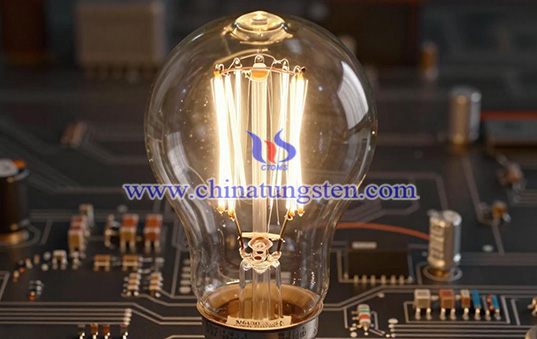
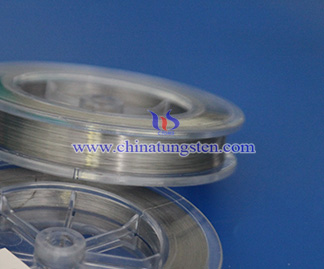
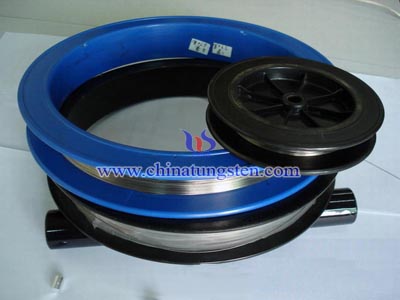
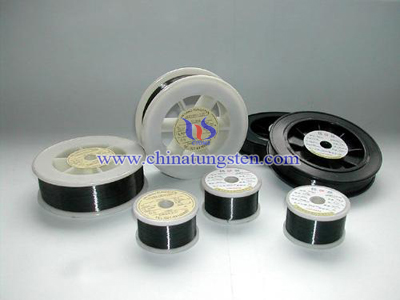
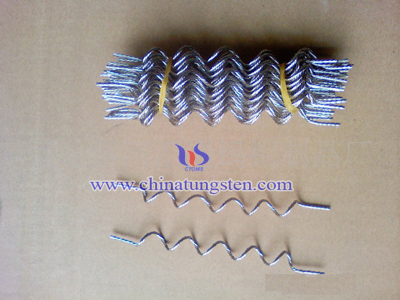
CTIA's tungsten wire is mainly used as a filament or radiation source in the lighting industry, typically operating under vacuum or inert gas environments for high-temperature lighting and infrared radiation. It withstands high temperature, electrical load, and repeated thermal cycling while maintaining low evaporation, minimal deformation, and stable resistivity, enabling continuous light emission in applications such as incandescent lamps, halogen lamps, automotive lighting, optical sources, infrared sources, and specialty lighting.
1. CTIA's Tungsten Wire for Incandescent Lamps
Incandescent lamps use tungsten wire as the filament, heated to approximately 2600–2800K to emit a continuous spectrum. It requires structural stability and controlled evaporation to reduce bulb blackening and light decay. Tungsten wire, with high melting point and low vapor pressure, maintains stable emission under continuous operation, while its resistivity supports uniform heat distribution. CTIA improves diameter consistency and surface stability through raw material purity control and drawing processes, enabling more uniform light emission and longer service life for general lighting, decorative lamps, and vintage lighting.
2. CTIA's Tungsten Wire for Halogen Lamps
Halogen lamps operate at approximately 2900–3200K and use a halogen cycle to reduce tungsten evaporation, requiring higher high-temperature stability and sag resistance. Doped tungsten wire, also referred to as non-sag tungsten wire or AKS tungsten wire, is used in halogen lamps, where its lower vapor pressure at high temperature supports material balance during the halogen cycle. CTIA applies K-Si-Al doping to increase recrystallization temperature and structural stability, allowing the filament to maintain shape at high temperature, suitable for halogen and iodine lamps with extended service life.
3. CTIA's Tungsten Wire for Automotive Lighting
Automotive lighting typically uses halogen lamp structures, where filaments operate under vibration, shock, and frequent switching, requiring high mechanical strength and thermal fatigue resistance. Tungsten wire maintains structural stability due to its high-temperature strength and low thermal expansion, while tungsten-rhenium wire improves high-temperature ductility and reduces brittle fracture risk. CTIA enhances material stability through alloying and microstructure control, enabling reliable performance in automotive headlamps and signal lamps with consistent light output.
4. CTIA's Tungsten Wire for Projection and Optical Light Sources
Projection and optical systems use tungsten wire as a stable light source, requiring continuous output and low contamination of optical systems. Its low vapor pressure at high temperature reduces evaporation deposition, while providing a continuous spectrum for imaging. CTIA controls diameter and surface condition through precision drawing and surface treatment, ensuring uniform light distribution for projectors, optical instruments, and spectral analysis equipment, supporting stable luminous flux and reduced optical contamination.
5. CTIA's Tungsten Wire for Stage and Film Lighting
Stage and film lighting use tungsten filaments requiring stable light quality and high color rendering. Tungsten wire produces a continuous spectrum at high temperature, with a color rendering index close to 98, a warm color temperature of approximately 3000K, and no flicker. CTIA controls microstructure and dimensional consistency to reduce light fluctuation, ensuring stable emission for stage and photographic lighting with consistent color performance.
6. CTIA's Tungsten Wire for Infrared Heating Light Sources
Infrared light sources use tungsten wire as a radiating element, emitting continuous infrared radiation at high temperature. These applications require rapid heating response, stable radiation output, and resistance to thermal cycling. Tungsten wire reaches operating temperature quickly and maintains stable radiation due to its high melting point and thermal stability. CTIA improves thermal shock resistance through densification and structure optimization, enabling stable performance in infrared heating lamps and related equipment.
7. CTIA's Tungsten Wire for Medical and Laboratory Light Sources
Medical and laboratory equipment use tungsten wire as a light source, requiring stable output and good repeatability. Its continuous spectrum supports observation and detection applications, with strict requirements on purity and dimensional consistency. CTIA improves consistency by controlling impurities and diameter tolerance, ensuring stable light output for surgical lighting, microscopy, and laboratory systems, reducing light fluctuation.
8. CTIA's Tungsten Wire for Decorative and Miniature Lamps
Decorative and miniature lamps use fine-diameter tungsten wire as filaments, requiring high dimensional precision and uniform emission for compact designs. Tungsten wire can be processed into fine structures and provides stable emission at low power. CTIA ensures diameter consistency through precision drawing and surface treatment, improving brightness uniformity and visual appearance.
9. CTIA's Tungsten Wire for Special Environment Lighting
Lighting in low-pressure or vacuum environments requires higher control of evaporation behavior and structural stability. Tungsten wire exhibits low evaporation rate under such conditions, maintaining structure and emission performance. CTIA enhances stability through material purity and process optimization, ensuring reliable operation in specialized lighting systems.
10. CTIA's Tungsten Wire for Flash and Pulsed Light Sources
In flash and pulsed light sources, tungsten wire operates under instantaneous high current and must withstand thermal shock from rapid heating. Tungsten wire has certain thermal shock resistance and can generate light output in a short time. CTIA improves structural stability through microstructure control and process optimization, enabling resistance to current impact, reducing fracture risk, and maintaining stable response.
Tungsten wire is primarily used as a high-temperature filament or radiation source in the lighting industry. Its vapor pressure, structural stability, and electrical properties directly influence lighting performance, while material consistency affects filament behavior under different operating conditions. CTIA maintains stable light emission and reliable performance across various lighting applications through material purity control and process optimization.
For any inquiry, please contact tungsten wire manufacturer: CTIA GROUP
Email: sales@chinatungsten.com
Tel: 0086 592 5129696 / 0086 592 5129595
Website: www.tungsten.com.cn
WeChat:

Related Products: