CTIA's Tungsten Wire in Electrical Components
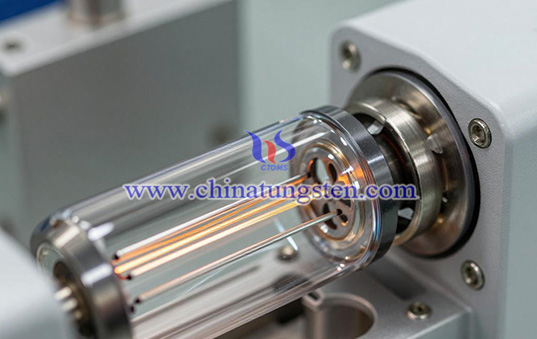
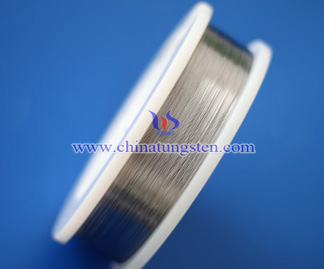
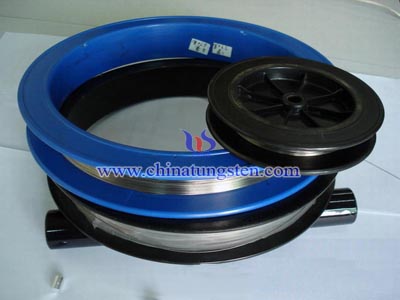
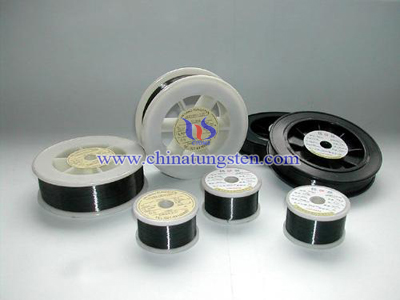
CTIA's tungsten wire is widely used in electrical components for conductive connection, structural support, and functional implementation. These components are required to maintain stable conductivity under varying temperatures and current loads while withstanding thermal cycling and mechanical stress. Instabilities such as resistance drift, deformation, or evaporation may directly affect circuit reliability and service life. Tungsten wire provides stable electrical performance and minimal dimensional change at elevated temperatures, with a melting point of approximately 3422°C, resistivity of about 5.5×10⁻⁸ Ω·m, and a low thermal expansion coefficient of around 4.5×10⁻⁶/K. CTIA ensures that tungsten wire meets the performance and structural requirements of diverse electrical and electronic components through controlled material purity and optimized processing.
1. CTIA's Tungsten Wire for Electrical Connection Structures
Electrical connection structures are used to ensure conductivity and signal transmission between circuits, requiring stable electrical continuity and contact performance. Connection points are subjected to heat generated by current flow and external temperature variations. Tungsten wire exhibits continuous resistance variation at high temperature, reducing performance fluctuation caused by thermal changes. Its low vapor pressure helps minimize material evaporation in vacuum or sealed environments. CTIA ensures stable contact performance in connection structures through precise diameter control and surface condition optimization, suitable for high-temperature circuits and precision electrical connections.
2. CTIA's Tungsten Wire for Electrical Heating Elements
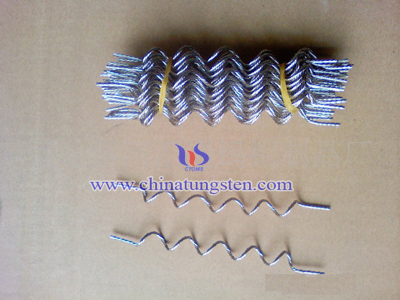
Functional units in electrical components often rely on electrical energy conversion for heating. Tungsten wire generates Joule heat under current and can maintain stable heat output at temperatures above 2000°C. It exhibits good creep resistance at high temperature, with a recrystallization range of approximately 1200–1400°C, allowing relatively stable structure under typical operating conditions. CTIA stabilizes heating performance through heat treatment and microstructure control, enabling consistent operation under repeated electrical cycles in heating elements.
3. CTIA's Tungsten Wire for Electronic Component Leads
Leads in electronic components provide electrical connection between internal structures and external circuits, requiring both conductivity and mechanical strength. During packaging and operation, leads must withstand thermal and assembly stress while maintaining connection stability. Tungsten wire retains high tensile strength even at fine diameters and shows limited deformation under temperature variation, supporting structural stability. Its predictable resistance-temperature relationship contributes to controlled signal transmission. CTIA ensures suitability for lead structures through drawing and annealing control, improving connection reliability.
4. CTIA's Tungsten Wire for Electrical Contact Components
Electrical contact components enable circuit switching and conduction, where contact interface stability directly affects performance. Contact points must maintain stable contact area under pressure while minimizing contact resistance. Tungsten wire provides high hardness and deformation resistance at elevated temperatures, helping maintain geometric stability under long-term thermal exposure. Its low dimensional variation during thermal cycling reduces contact drift. CTIA improves consistency and stability in contact structures through dimensional control and material uniformity.
5. CTIA's Tungsten Wire for Electrical Vacuum Components
Electrical vacuum components operate under low-pressure or high-vacuum conditions, typically around 10⁻⁶–10⁻⁷ Pa, requiring strict control of evaporation and contamination. Conductive materials must maintain stable performance under high temperature and electron bombardment without degrading the vacuum environment. Tungsten wire exhibits low evaporation rates and stable electrical properties in vacuum, supporting continuous conduction. It also retains mechanical strength at high temperature, serving both conductive and structural roles. CTIA ensures suitability for vacuum electrical components through impurity control and process quality optimization.
In a word, tungsten wire serves multiple functions in electrical components, including conductive connection, heating, lead structures, and contact interfaces. It maintains stable electrical and mechanical performance under high temperature, electrical load, and complex operating conditions. Varying application scenarios place different demands on conductivity, dimensional control, and environmental adaptability. CTIA ensures its tungsten wire meets diverse application requirements through material control and process optimization, delivering consistent and reliable performance across electrical components.
For any inquiry, please contact tungsten wire manufacturer: CTIA GROUP
Email: sales@chinatungsten.com
Tel: 0086 592 5129696 / 0086 592 5129595
Website: www.tungsten.com.cn
WeChat:

Related Products: