Physical Properties of Tungsten Wire
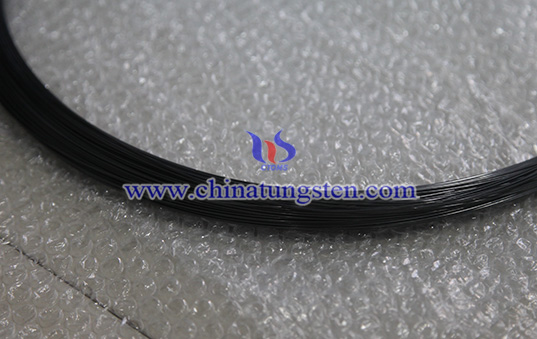
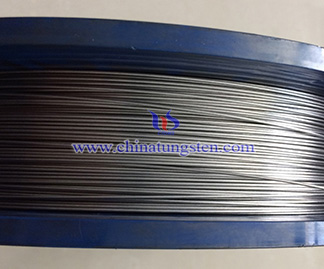
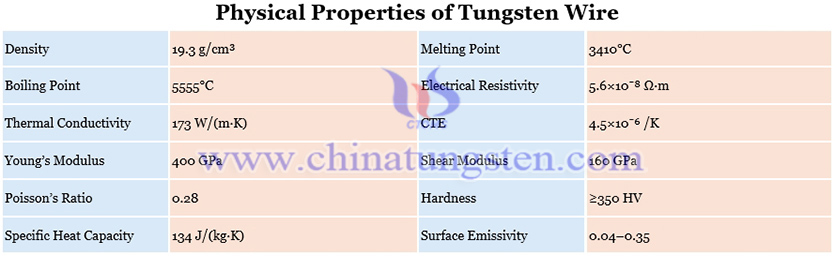
Tungsten wire is a fine metal material produced from high-purity tungsten (W≥99.95%) through powder metallurgy and multi-pass wire drawing processes. Its physical properties rank among the higher levels of engineering metals. Tungsten has a density of approximately 19.3 g/cm³, a melting point of 3410°C, and a boiling point of about 5555°C. These characteristics originate from its body-centered cubic crystal structure and strong metallic bonding, enabling it to maintain structural stability in high-temperature environments.
Tungsten wire has an electrical resistivity of approximately 5.6×10⁻⁸ Ω·m and a positive temperature coefficient. Its resistance increases steadily during heating, supporting controlled heating applications. Its thermal conductivity is about 173 W/(m·K), which helps reduce localized heat concentration. Its coefficient of thermal expansion is approximately 4.5×10⁻⁶ /K, resulting in minimal dimensional change during thermal cycling, suitable for precision applications.
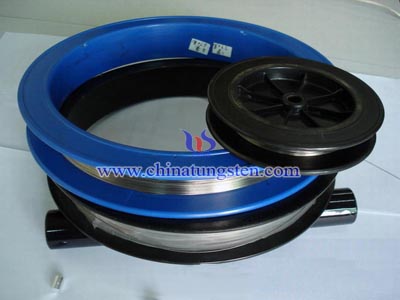
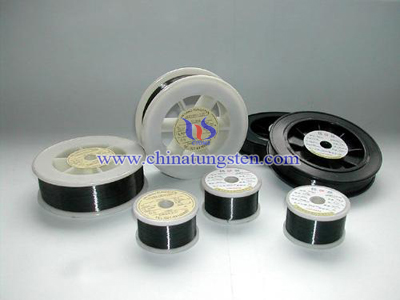
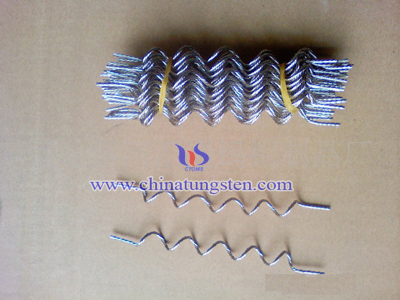
Tungsten wire has a Young’s modulus of about 400 GPa and a shear modulus of about 160 GPa, showing strong rigidity and deformation resistance. Its hardness is typically ≥350 HV, and it exhibits good creep resistance. In addition, tungsten wire has low vapor pressure and a surface emissivity ranging from 0.04 to 0.35, providing stable performance in vacuum and high-temperature environments. The physical properties of tungsten wire are shown as the picture bellow:
For any inquiry, please contact tungsten wire manufacturer: CTIA GROUP
Email: sales@chinatungsten.com
Tel: 0086 592 5129696 / 0086 592 5129595
Website: www.tungsten.com.cn
WeChat:

Related Products: