CTIA’s Tungsten Wire in Vacuum and Electronic Devices
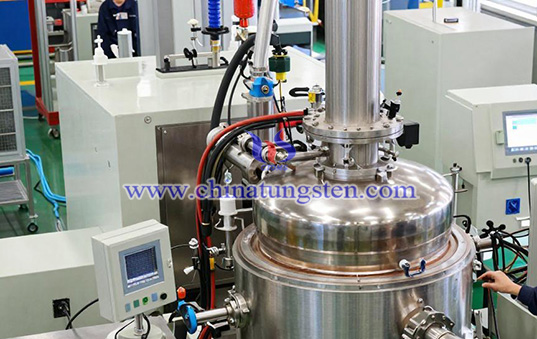
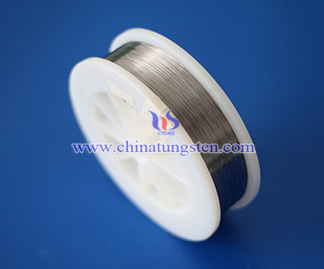
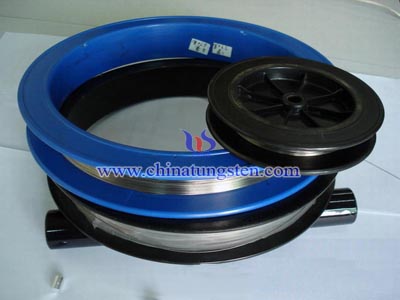
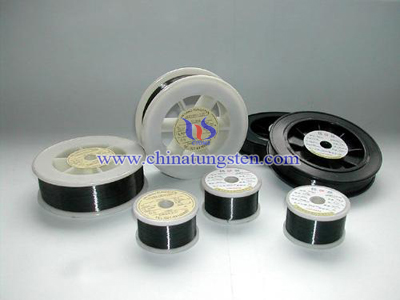
CTIA's tungsten wire is widely used in vacuum and electronic devices, where high-temperature and high-vacuum environments require materials to withstand continuous heating, electrical load, thermal cycling, and controlled evaporation loss and dimensional stability. Tungsten wire maintains stable structure and performance under these conditions and is applied in vacuum electron emission, heating elements, evaporation coating, electron beam systems, microelectronic thin film deposition, vacuum measurement devices, and high-temperature scientific research.
1. CTIA’s Tungsten Wire for Vacuum Electron Emission
Vacuum electron emission devices require tungsten wire to continuously emit electrons at high temperature while maintaining stable current and uniform emission, and reducing material loss and performance fluctuation during long-term operation. These applications typically operate under high-temperature and high-vacuum conditions, placing requirements on resistivity stability, evaporation loss control, and structural stability.
Tungsten wire has a high melting point and low vapor pressure, enabling continuous electron emission at approximately 2000–2600K, with relatively stable resistivity, supporting continuous emission. During long-term use, grain structure and surface condition affect emission behavior. CTIA regulates grain structure through hot isostatic pressing and annealing, combined with raw material purity control, reducing the impact of impurities and structural inhomogeneity, resulting in more stable emission performance. Emission uniformity is improved and service life is extended.
2. CTIA’s Tungsten Wire for Vacuum Heating Elements
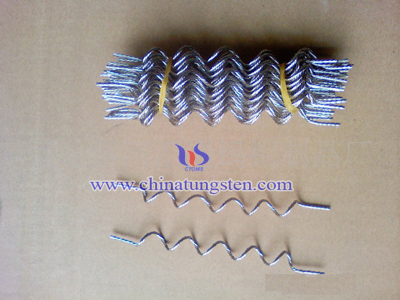
Vacuum furnaces and electronic heating systems require tungsten wire to operate stably under vacuum levels of 10⁻³–10⁻⁷ Pa and temperatures of approximately 2000–2800K, while withstanding thermal cycling and thermal stress caused by localized current concentration, and maintaining heating uniformity. Tungsten wire has certain high-temperature strength and creep resistance, allowing relatively stable geometry during long-term heating, while its resistivity characteristics help maintain uniform current distribution.
Material densification and structural uniformity influence heating stability. CTIA improves internal density and dimensional consistency through powder metallurgy and multi-pass cold drawing, combined with annealing to optimize structure, resulting in smaller performance variation during long-term heating. Heating uniformity is improved and service life is extended.
3. CTIA’s Tungsten Wire for Evaporation Coating Heating
Vacuum evaporation coating requires tungsten wire to function as heating elements or support structures under high vacuum (10⁻⁶–10⁻⁷Pa) and high temperature, while controlling self-evaporation and ensuring process continuity and stability. These conditions require low vapor pressure and dimensional stability.
Tungsten wire has low vapor pressure at approximately 2500K, reducing material evaporation and helping maintain a stable evaporation environment. Diameter consistency and surface condition influence heating uniformity and evaporation rate distribution. CTIA improves diameter uniformity and surface stability through precision surface treatment and dimensional control, reducing local overheating and evaporation fluctuation. Process stability is enhanced and film thickness consistency is improved.
4. CTIA’s Tungsten Wire for Electron Beam Evaporation Systems
Electron beam evaporation systems typically operate at approximately 2500–3000K under high vacuum, requiring higher stability of heating elements and support structures, while withstanding thermal shock and temperature gradients caused by localized high-energy input. Tungsten wire, with high melting point and certain high-temperature strength, can be used as heating elements and support structures, and its structural stability supports continuous evaporation processes.
Microstructure affects local temperature distribution. CTIA optimizes structure through grain control and annealing, improving structural stability and reducing local overheating risk caused by inhomogeneity. Process continuity is enhanced and system stability is improved.
5. CTIA’s Tungsten Wire for Microelectronic Thin Film Deposition
Microelectronic and thin film device manufacturing requires heating elements to provide stable heat sources and controlled temperature distribution, ensuring process stability and repeatability. These applications require high precision in temperature control and material consistency.
Tungsten wire has thermal conductivity and relatively stable resistivity, helping maintain stable temperature fields and reduce temperature fluctuation effects. Dimensional consistency and structural uniformity influence local temperature distribution. CTIA controls wire diameter consistency through multi-pass cold drawing and annealing, and optimizes structure to improve temperature uniformity. Film thickness control accuracy and process repeatability are improved.
6. CTIA’s Tungsten Wire for Vacuum Measurement Devices
Vacuum measurement devices require materials to undergo repeated heating or electron emission under high vacuum, while maintaining signal stability and structural integrity. These applications are sensitive to material purity and long-term stability.
Tungsten wire maintains relatively stable structure under cyclic heating, with minimal change in electrical properties, supporting stable measurement processes. Impurities and surface condition affect signal response. CTIA reduces the impact of impurities and surface defects through raw material purity control and surface treatment, improving signal stability, measurement consistency, and operational reliability.
7. CTIA’s Tungsten Wire for High-Temperature Scientific Research
High-temperature scientific experiments are conducted under high temperature and high vacuum conditions, requiring heating elements to operate stably and ensure repeatable experimental results. These conditions require geometric and electrical stability.
Tungsten wire can be used continuously at approximately 2500K under high vacuum, with limited dimensional change, supporting stable heating conditions. Material consistency influences temperature distribution. CTIA controls dimensional consistency and structural stability through process control, improving heating controllability and reducing variation caused by material differences. Experimental repeatability is improved, supporting repeated comparative testing.
CTIA's tungsten wire demonstrates stable performance under high-temperature and high-vacuum conditions with high purity, good densification, and stable microstructure and other advantages. Its chemical composition control helps maintain resistivity stability, dimensional consistency, and structural integrity during long-term operation, reducing performance fluctuation and material loss risk, and providing a material basis for reliable equipment operation.
For any inquiry, please contact tungsten wire manufacturer: CTIA GROUP
Email: sales@chinatungsten.com
Tel: 0086 592 5129696 / 0086 592 5129595
Website: www.tungsten.com.cn
WeChat:

Related Products: