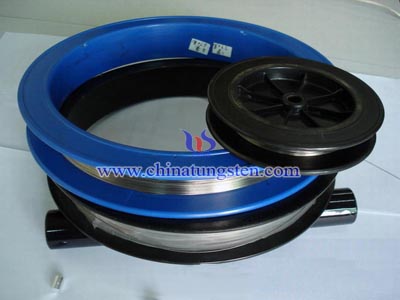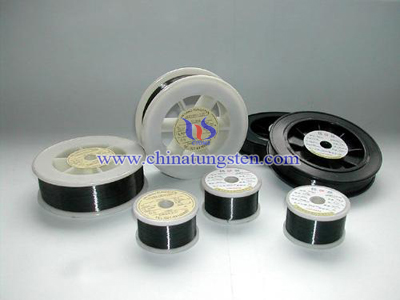
Rare Earth Tungsten Wire
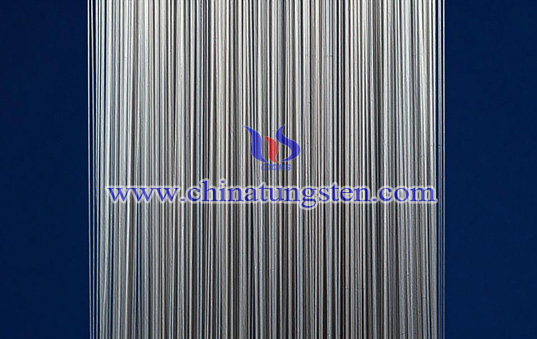
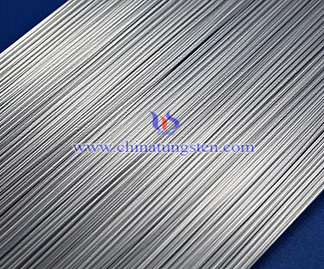
Rare earth tungsten wire refers to tungsten-based wire doped with trace rare earth oxides such as La₂O₃, CeO₂, and Y₂O₃. Unlike pure tungsten wire, which relies mainly on intrinsic properties, rare earth tungsten wire regulates grain structure through an oxide dispersion strengthening mechanism, enabling it to maintain relatively stable microstructure and mechanical performance under high-temperature conditions typically ranging from 2000 to 2800°C, as well as in vacuum or low-pressure environments with pressures between 10⁻³ and 10⁻⁷ Pa. CTIA's rare earth tungsten wire is mainly used in applications requiring high-temperature structural stability, creep resistance, and consistent electron emission, such as electron emission cathodes, vacuum electronic devices, and high-temperature heating elements.
1. Material System of Rare Earth Tungsten Wire
Rare earth tungsten wire is generally classified by the type of doped oxide and belongs to different Oxide Dispersion Strengthening (ODS) systems. The main categories are as follows:
1.1 Lanthanated Tungsten Wire (La₂O₃-Doped Tungsten Wire)
The La₂O₃ content is typically in the range of 0.5%–2.0%. During sintering and plastic deformation processing, finely dispersed oxide particles are formed, usually at the nanometer scale from tens to hundreds of nanometers. This system increases the recrystallization temperature from about 1200–1400°C for pure tungsten to approximately 1600–1800°C. Even above 2000°C, it can maintain a fine-grained structure, effectively reducing high-temperature creep rates. In addition, La₂O₃ can adjust the electron work function, resulting in more stable thermionic emission current density.
1.2 Cerium Tungsten Wire (CeO₂-Doped Tungsten Wire)
The CeO₂ content is typically 0.2%–1.0%. This system improves plastic deformation behavior during powder metallurgy and multi-pass wire drawing, reducing wire breakage risk in ultra-fine diameters such as Φ10–50 μm. In microstructure terms, CeO₂ helps refine grains; however, under long-term use above 2500°C, its structural stability is slightly lower than La₂O₃ doped systems, making it more suitable for medium-to-high temperature applications around 1500–2400°C.
1.3 Yttrium Tungsten Wire (Y₂O₃-Doped Tungsten Wire)
The Y₂O₃ content is typically 0.3%–1.5%. Its oxide particles exhibit high thermal stability and continue to provide effective grain boundary pinning at temperatures above 2200°C. Under long-term high-temperature operation, it significantly slows grain growth and reduces steady-state creep rate, making it suitable for applications requiring long service life and structural stability.
CTIA notes that different rare earth tungsten wire systems are not directly interchangeable, as each is designed for specific operating conditions. Selection of tungsten wire depends on the operating temperature range, load conditions, and service life requirements. Lanthanated tungsten wire provides a balanced combination of performance stability and manufacturing maturity, making it the most widely adopted rare earth tungsten wire.
2. Rare Earth Tungsten Wire vs. Other Tungsten Wires
Different tungsten wire types differ in strengthening mechanisms and application focus. Compared with pure tungsten wire, rare earth tungsten wire exhibits a slower recrystallization rate and suppressed grain growth at high temperatures, making it more suitable for long-term operation above 2000°C.
Compared with K-doped tungsten wire, which relies on a potassium bubble chain structure for anti-sag performance in filament applications, rare earth tungsten wire uses oxide particles to stabilize grain boundaries and focuses more on overall microstructural stability and electron emission performance.
Compared with tungsten rhenium wire, which mainly relies on solid solution strengthening to improve ductility and thermal shock resistance, rare earth tungsten wire depends on dispersion strengthening and shows more stable microstructure under long-term high-temperature conditions.
3. Applications of Rare Earth Tungsten Wire
Rare earth tungsten wire is mainly used in environments requiring high-temperature structural stability and consistent electron emission performance.
3.1 Electron Emission Cathodes
Used in electron guns and vacuum electronic systems as thermionic emission sources, operating at approximately 2000–2600°C. Stable grain evolution helps improve emission stability and reduce drift.
3.2 Vacuum Electronic Devices
Used as emission or structural materials in 10⁻⁴–10⁻⁷ Pa environments. Low vapor pressure helps slow surface degradation and maintain stable performance over time.
3.3 High-Temperature Heating Elements
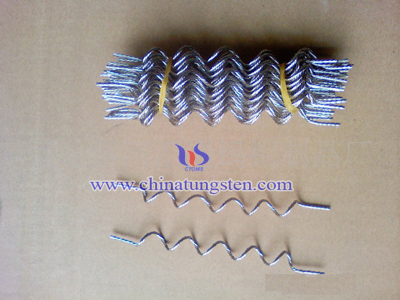
Used as heating filaments in vacuum or inert atmospheres at approximately 2000–2500°C. Good creep resistance reduces sagging and structural deformation.
3.4 Specialized Lighting and Functional Devices
Suitable for gas discharge lamps, high-temperature radiation sources, and cyclic start-stop operating conditions, maintaining stable performance and extending service life.
Rare earth tungsten wire achieves effective control of grain structure and deformation behavior under high-temperature conditions through oxide dispersion strengthening, enabling stable dimensional integrity and consistent performance during long-term operation. CTIA recommends that selection of tungsten wire should consider operating temperature, vacuum level, load conditions, and service life requirements to ensure optimal matching between material system and application scenario.
For any inquiry, please contact tungsten wire manufacturer: CTIA GROUP
Email: sales@chinatungsten.com
Tel: 0086 592 5129696 / 0086 592 5129595
Website: www.tungsten.com.cn
WeChat:

Related Products: