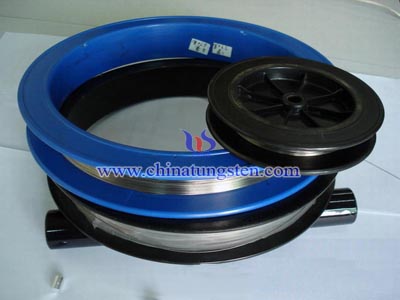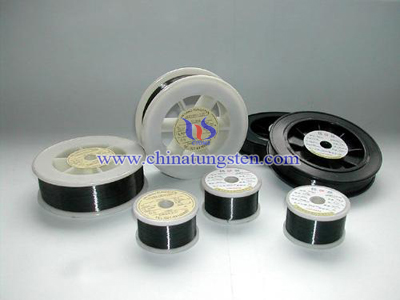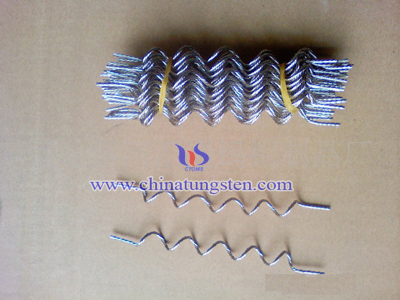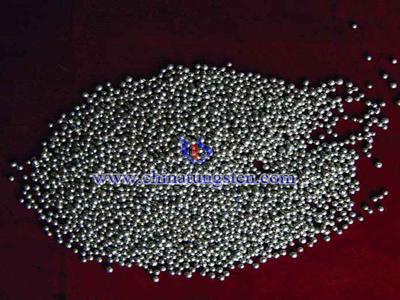
CTIA's Tungsten Wire in Research Equipment
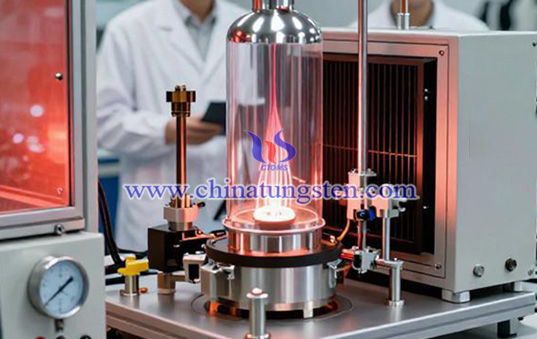
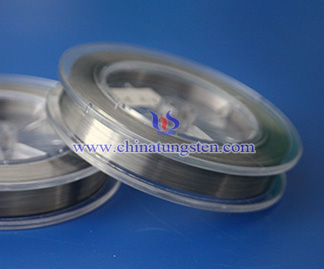
CTIA's tungsten wire is used in research equipment for heating, electron emission, and structural support, typically operating in vacuum, high-temperature, and electric field environments. Experimental systems require precise control of temperature distribution, electron behavior, and signal output under stable power and controlled atmospheres. Materials must maintain dimensional stability and consistent electrical response to avoid distortion or evaporation affecting results under continuous high temperature, electrical load, and cyclic conditions. CTIA's tungsten wire supports stable operation across vacuum heating systems, electron emission devices, ion source equipment, plasma systems, and various research measurement platforms, with minimal structural change and continuous resistance behavior at elevated temperatures.
1. CTIA's Tungsten Wire for Vacuum High-Temperature Heating Experiments
Vacuum high-temperature experiments are used for material sintering, heat treatment, and phase transformation studies under low-pressure or inert atmospheres. Heating elements must provide stable and controllable heat sources. Current passing through tungsten wire generates Joule heating, with temperature increasing according to power input while maintaining uniform heat distribution. Excessive deformation or evaporation may affect chamber cleanliness and temperature uniformity. Tungsten wire exhibits continuous resistance variation and structural stability at high temperature, supporting consistent long-term heating. CTIA ensures stable heating performance through diameter tolerance control and microstructure optimization.
2. CTIA's Tungsten Wire for Electron Emission Experiments
Electron emission experiments investigate thermionic emission behavior and are used in electron guns, Scanning Electron Microscope (SEM), and related systems. Tungsten wire acts as a thermionic cathode, generating a stable electron flow when heated. Emission stability depends on temperature control and surface condition. Tungsten wire provides continuous emission capability with stable electrical behavior at high temperature. CTIA improves emission consistency through purity control and processing uniformity, supporting stable operation in electron emission research.
3. CTIA's Tungsten Wire for Ion Source Experiments
Ion source experiments generate ion beams for applications such as Mass Spectrometry (MS), ion implantation, and surface treatment. Tungsten wire functions as a heating or discharge component, promoting gas ionization. Materials must maintain stable discharge under electric field and gas interaction while withstanding high temperature and particle bombardment. Tungsten wire shows low evaporation and stable electrical behavior, supporting stable ion generation. CTIA ensures consistent performance through microstructure and surface control.
4. CTIA's Tungsten Wire for Plasma Experiments
Plasma experiments study ionized gas behavior under high-energy excitation, typically sustained by electric fields or heating. Tungsten wire serves as a discharge electrode or heating source. Materials must maintain structural stability under high temperature and complex atmospheres to ensure discharge uniformity. Tungsten wire exhibits minimal dimensional change and stable resistance response, supporting controlled plasma processes. CTIA maintains stable performance through material consistency control.
5. CTIA's Tungsten Wire for High-Precision Temperature Control Experiments
High-precision temperature control experiments require stable and adjustable heating for thermophysical testing and heat transfer analysis. Tungsten wire enables continuous temperature regulation under varying power input, with resistance changes used as feedback signals. Consistent response under thermal cycling is required to reduce control error. Tungsten wire provides stable structure and continuous thermal response. CTIA improves repeatability through diameter and material uniformity control.
6. CTIA's Tungsten Wire for Vacuum Measurement and Auxiliary Components
Vacuum systems include measurement and monitoring devices for pressure and gas composition. Tungsten wire functions as a thermal or electron emission element in signal conversion. Components must operate under low pressure without contaminating the chamber. Tungsten wire offers stable electrical behavior and low evaporation, supporting consistent signal output. CTIA ensures suitability through purity and process control for long-term operation.
7. CTIA's Tungsten Wire for Materials Science Experiments
Materials science experiments involve high-temperature testing, thermal cycling, and behavior analysis. Stability of materials and components directly affects data reliability. Tungsten wire shows minimal structural change and continuous electrical behavior under high temperature, providing a stable experimental condition or reference. CTIA ensures consistent performance through raw material and process control, supporting reproducible results.
Research equipment requires materials with stable high-temperature performance, consistent electrical response, and adaptability to controlled environments. Tungsten wire maintains structural integrity and predictable resistance behavior under such conditions, supporting energy conversion and signal generation. CTIA ensures reliable performance across research equipment through controlled raw materials and optimized processing, meeting long-term operation and repeatability requirements.
For any inquiry, please contact tungsten wire manufacturer: CTIA GROUP
Email: sales@chinatungsten.com
Tel: 0086 592 5129696 / 0086 592 5129595
Website: www.tungsten.com.cn
WeChat:

Related Products: