Electronic Tungsten Wire
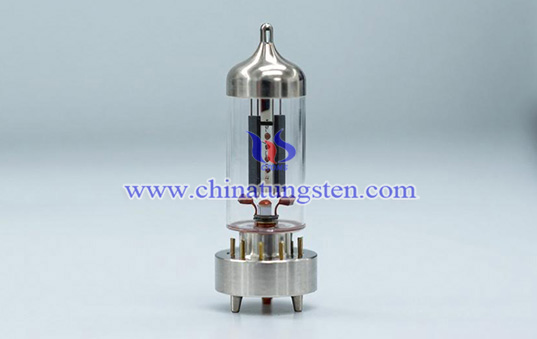
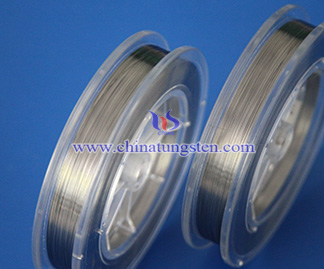
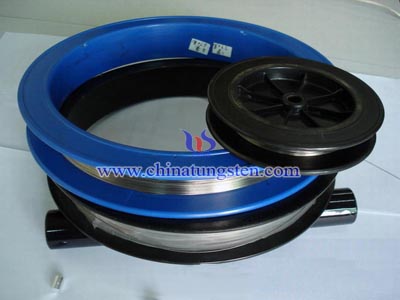
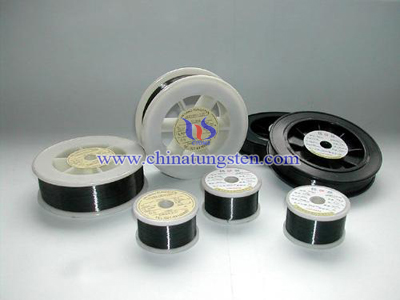
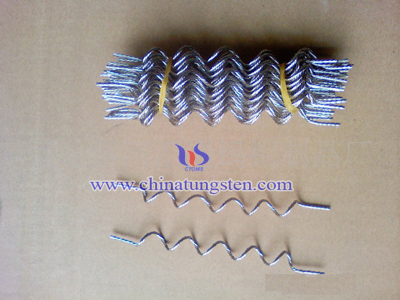
CTIA's electronic tungsten wire refers to tungsten wire used in the electronic industry. CTIA's tungsten wire is widely used as an electron emission source or heating element in various vacuum electronic devices. Electronic devices require stable emission, structural integrity, and low consumption under high-temperature and high-vacuum conditions approximately 10⁻⁴–10⁻⁷Pa. Tungsten wire can operate reliably under these conditions and is therefore commonly used in electronic applications, with a melting point of about 3422°C, a vapor pressure of about 10⁻³–10⁻²Pa in the range of 2500–3000K, and good high-temperature mechanical stability.
Electrons are typically generated through thermionic emission in electronic devices. When heated by electric current, electrons gain sufficient energy to escape from the material surface and form an electron flow. Tungsten has a work function of about 4.5–4.6eV and can achieve stable emission at elevated temperatures. The emission current density follows the Richardson-Dushman Equation, allowing regulation through temperature control.
Materials at high temperatures continuously undergo evaporation. If the evaporation rate is too high, the wire diameter decreases and current density increases, leading to emission instability or even breakage. Tungsten exhibits a relatively low evaporation rate at high temperatures, enabling dimensional stability over extended periods in vacuum, which is directly related to service life.
Emission performance depends not only on the material itself but also on surface condition. Surface oxides, impurities, or adsorbed gases can change the effective work function and affect emission stability. Therefore, cleaned tungsten wire is typically used, and surface contamination is reduced through cleaning, vacuum annealing, or activation treatment to improve emission consistency.
Tungsten wire may undergo recrystallization and grain growth under prolonged high-temperature exposure, leading to softening, sagging, or localized overheating. These structural changes affect emission uniformity and operational stability. The recrystallization temperature can be increased by controlling cold working deformation and heat treatment. In some applications, alloy systems such as W-Re or dispersion-strengthened systems such as W-ThO₂ are used to improve high-temperature structural stability and resistance to fracture.
CTIA's tungsten wire is mainly used in cathodes of electron tubes, electron beam emission devices, vacuum evaporation and heating systems, scanning electron microscopes, and certain discharge or plasma devices. Different applications have varying requirements for operating temperature approximately 1800–2800°C, current density, and service life, requiring corresponding selection of material purity, doping systems, and dimensional specifications.
The application of electronic tungsten wire is based on its high melting point, low evaporation rate, ability to achieve stable thermionic emission, and controllable microstructure and surface condition. Selection should consider operating temperature, emission requirements, and service life, along with key parameters such as purity, grain structure, surface condition, and dimensional tolerance.
For any inquiry, please contact tungsten wire manufacturer: CTIA GROUP
Email: sales@chinatungsten.com
Tel: 0086 592 5129696 / 0086 592 5129595
Website: www.tungsten.com.cn
WeChat:

Related Products: