What Is Tungsten Wire?
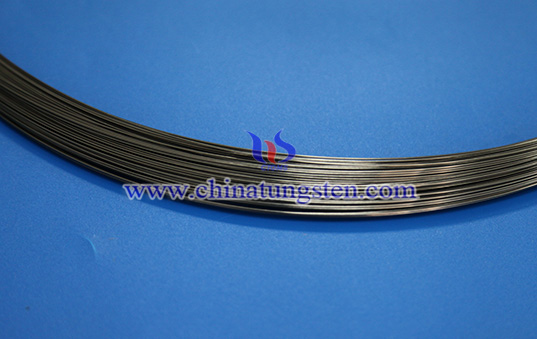
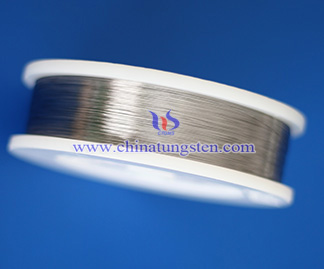
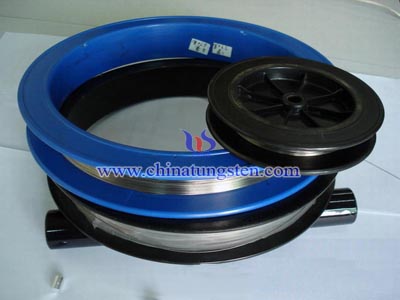
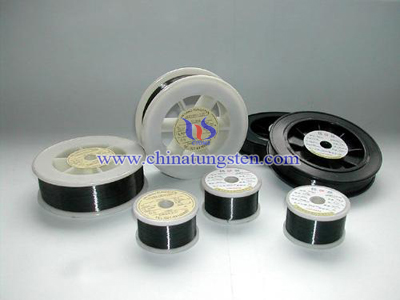
Tungsten wire is a slender metal wire manufactured from tungsten through powder metallurgy, thermal processing, and precision wire drawing. As a tungsten wire manufacturer, CTIA GROUP has observed through long-term production practice that tungsten wire is characterized by a high melting point, high strength, and stable high-temperature performance, which gives it practical value in industrial, scientific research, and high-end manufacturing scenarios. Tungsten has a melting point of approximately 3422°C (6192°F), a density of about 19.25 g/cm³, an electrical resistivity of approximately 5.3×10⁻⁸ Ω·m at room temperature, and a coefficient of thermal expansion of about 4.5–6.8×10⁻⁶/K. These physical parameters allow tungsten wire to maintain its basic mechanical and electrical properties even in high-temperature, vacuum, or inert atmospheres.
1.Classification of Tungsten Wire
The raw materials for tungsten wire are typically high-purity tungsten powder or tungsten billets, with a purity generally ≥99.95%. Depending on different material systems, tungsten wire can be classified into three categories: pure tungsten wire, doped tungsten wire, and tungsten alloy wire. Pure tungsten wire is mainly used in general industrial applications and high-temperature components; doped tungsten wire improves processing performance and sag resistance by adding oxides or small amounts of alloying elements such as potassium oxide, aluminum oxide, and silicon oxide; tungsten alloy wire is formed by tungsten combined with other metals such as nickel, iron, and copper, and is used in applications requiring certain mechanical strength or wear resistance. Tungsten’s Body-Centered Cubic (BCC) crystal structure provides relatively high strength at low temperatures, but high-temperature recrystallization may increase brittleness. Therefore, heat treatment and drawing control during production have a direct impact on the final performance of tungsten wire.
2.Manufacturing Process of Tungsten Wire
The manufacturing process of tungsten wire involves several key steps. First, tungsten powder is pressed and sintered at high temperatures to form a dense tungsten billet, which is a critical step determining internal structural uniformity and impurity levels. The billet is then processed through swaging, hot rolling, and rotary forging to improve density and grain structure, preparing it for wire drawing. Wire drawing is the core process of tungsten wire production, where the billet is gradually drawn through dies to achieve the required diameters, ranging from millimeters down to micrometers, while ensuring tensile strength and dimensional accuracy. After drawing, annealing heat treatment is performed according to application requirements to adjust mechanical properties and reduce brittleness. Surface treatments such as electrolytic polishing or alkaline cleaning may also be applied to meet surface quality requirements.
3. Specifications of Tungsten Wire
The diameter of tungsten wire typically ranges from φ0.01mm to φ3.0mm, with different specifications corresponding to different application scenarios. Fine and ultra-fine tungsten wire requires tighter tolerances, which can be controlled to the ±0.5μm level, directly affecting resistivity uniformity and mechanical stability.
4. Surface Condition of Tungsten Wire
The surface condition of tungsten wire is generally classified into two types: Black Tungsten Wire and Cleaned Tungsten Wire. Black Tungsten Wire retains processing residues or oxide films on the surface, appearing dark gray, and is suitable for general heating or structural applications. Cleaned Tungsten Wire is treated by cleaning or electrolytic processes, resulting in a cleaner surface, and is suitable for vacuum electronic devices or applications requiring high cleanliness.
5. Applications of Tungsten Wire
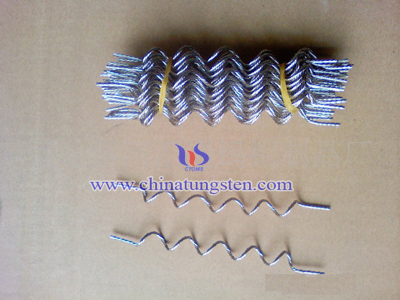
Tungsten wire has historically been widely used as filaments in incandescent lamps and halogen lamps, where its high melting point and electrical resistance allow stable light emission at high temperatures. In vacuum electronic devices such as electron guns, cathode ray tubes, and power amplifiers, tungsten wire can serve as a heating element or structural support. In high-temperature heating applications, tungsten wire can withstand operating conditions in vacuum furnaces or high-temperature heat treatment equipment. Doped tungsten wire is used as a carrier wire in diamond wire sawing, where it holds diamond particles for cutting brittle materials such as photovoltaic silicon wafers or semiconductor substrates. In addition, tungsten wire combined with tungsten-rhenium alloy wire can be used to manufacture high-temperature thermocouple probes for precise temperature measurement. Tungsten wire can also be combined with high-temperature fibers to form composite materials for thermal protection and structural components, and is also used in medical radiation equipment, experimental probes, and precision electrodes.
6.Development Trends of Tungsten Wire
Future development trends of tungsten wire materials include high-strength tungsten alloy wires with improved tensile strength and fatigue life, nanostructured and surface modification technologies, green manufacturing processes, and the development of composite multifunctional materials. CTIA GROUP is exploring these directions to meet the practical needs of various industrial and research scenarios. As a high-melting-point, heat-resistant, and stable metal wire, tungsten wire continues to hold practical significance in industrial, scientific, and certain high-end applications, and its application scope will gradually expand with advancements in manufacturing technology.
CTIA GROUP provides tungsten wire that meets practical application requirements through standardized processes and strict quality control. Tungsten wire plays an important role in industrial, scientific, electronic, precision machining, and high-temperature equipment applications, with its value primarily reflected in reliable material performance and application adaptability.
For any inquiry, please contact tungsten wire manufacturer: CTIA GROUP
Email: sales@chinatungsten.com
Tel: 0086 592 5129696 / 0086 592 5129595
Website: www.tungsten.com.cn
WeChat:
Related Products: