Lanthanated Tungsten Wire
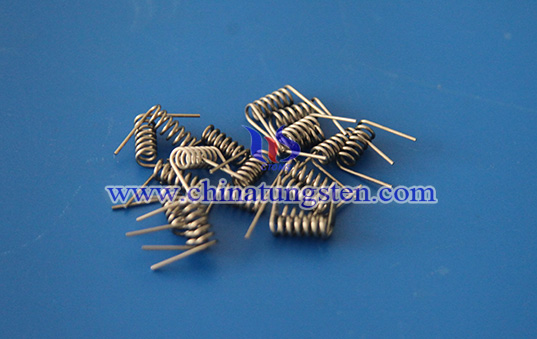
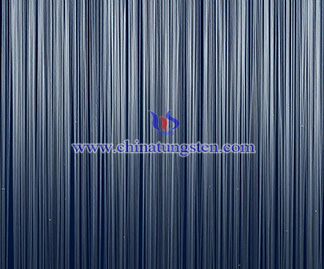
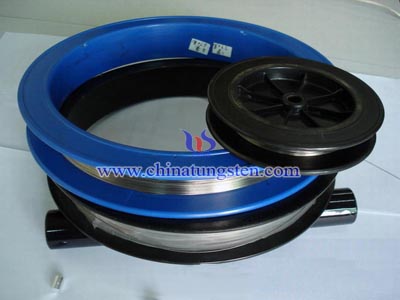
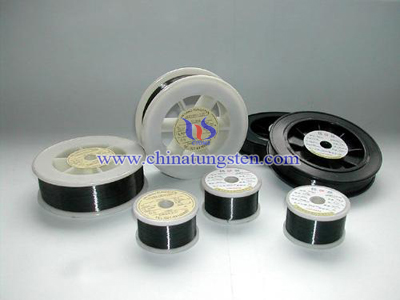
Lanthanated tungsten wire is a rare-earth doped tungsten wire with tungsten (W) as the matrix and lanthanum oxide (La₂O₃) as the doping component, typically at 0.5%–2.0%. While retaining tungsten’s high melting point and low vapor pressure characteristics, dispersion strengthening improves electron emission performance, workability, and high-temperature stability. The mechanism is based on the Zener pinning effect of La₂O₃ particles at grain boundaries, which suppresses recrystallization and grain growth. As a professional manufacturer of lanthanated tungsten wire, CTIA controls powder particle size, doping uniformity, and multi-pass processing to ensure a stable microstructure at high temperatures, meeting different application requirements.
1. Properties of Lanthanated Tungsten Wire
Lanthanated tungsten wire offers a balanced combination of strong electron emission capability and high-temperature stability. La₂O₃ migrates to the surface at elevated temperatures and reduces the work function from around 4.5 eV to approximately 2.7–3.2 eV, enhancing thermionic emission efficiency. This also enables lower operating temperatures at the same current, improving overall stability. The dispersed La₂O₃ phase strengthens grain boundary pinning, effectively suppressing recrystallization and grain growth, and raising the recrystallization temperature from about 1200–1400℃ to 1600–1800℃. As a result, creep resistance and dimensional stability at high temperatures are significantly improved, with stable performance maintained in the 1800–2600℃ range. Compared with pure tungsten, lanthanated tungsten wire exhibits better ductility during wire drawing and reduced cracking tendency. And it ensures more stable arc ignition and a more uniform current distribution in arc-related applications, minimizing localized overheating and electrode erosion.
2. Specifications of Lanthanated Tungsten Wire
The diameter range of lanthanated tungsten wire is typically φ0.1 mm–φ3.0 mm:
2.1 φ0.1–0.3 mm: used for electron emission elements and precision electrodes.
2.2 φ0.3–1.0 mm: used for welding electrodes and discharge structures.
2.3 above φ1.0 mm: used for high-temperature support and structural components.
3. Surface Condition of Lanthanated Tungsten Wire
Lanthanated tungsten wire is divided into black tungsten wire and cleaned tungsten wire. Black tungsten wire retains a surface oxide layer from processing and is used for general structural or electrode applications. Cleaned tungsten wire is chemically or electrolytically treated, providing higher surface purity for vacuum or impurity-sensitive environments. Surface cleanliness affects emission uniformity and interfacial behavior in high-temperature or vacuum conditions, so cleaned tungsten wire is preferred for high-demand applications.
4. Applications of Lanthanated Tungsten Wire
Lanthanated tungsten wire is mainly used in applications requiring stable electron emission, arc stability, or high-temperature structural support:
4.1 Welding Electrodes
Used as a core material for arc generation and maintenance, enabling stable conduction and electron emission to sustain a consistent arc for heating and melting workpieces.
4.2 Vacuum Electronic Devices
Used as thermionic cathodes or emission sources, delivering electron emission under heating conditions for electron transport and signal amplification in vacuum tubes and related devices.
4.3 Plasma and Discharge Equipment
Used as discharge electrodes under high current density conditions to maintain stable discharge for plasma generation or high-temperature arc environments.
4.4 High-Temperature Structures and Heating Elements
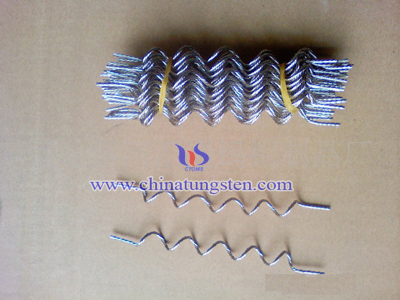
Used as heating elements or support structures in vacuum or inert atmospheres, maintaining structural stability under high-temperature furnace conditions.
Lanthanated tungsten wire is widely used due to its stable emission performance, good processability, and non-radioactive nature, and it can serve as a practical alternative to thoriated tungsten wire in most applications. For sourcing considerations, CTIA recommends evaluating La₂O₃ content, operating temperature, current load, and thermal cycling conditions, while also considering diameter tolerance and batch-to-batch consistency, as these factors directly influence service life and operational stability.
For any inquiry, please contact tungsten wire manufacturer: CTIA GROUP
Email: sales@chinatungsten.com
Tel: 0086 592 5129696 / 0086 592 5129595
Website: www.tungsten.com.cn
WeChat:
Related Products: