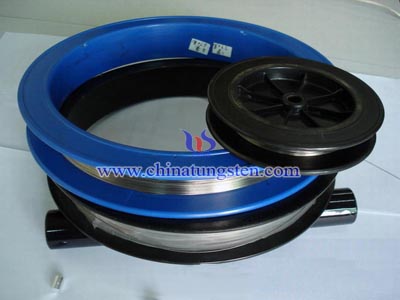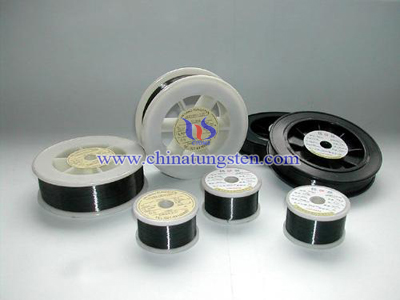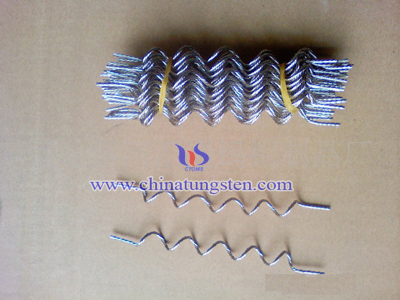
Tungsten Rhenium Wire
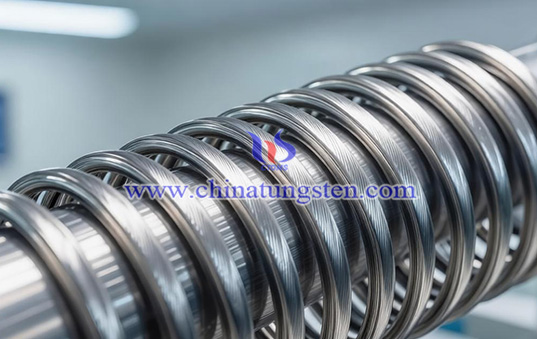
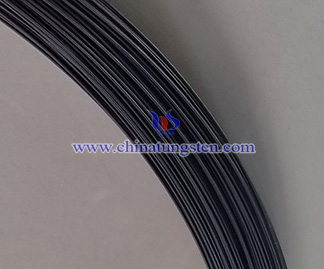
Tungsten rhenium wire is an alloy tungsten wire composed of tungsten (W) as the base metal with a certain proportion of rhenium (Re), including common grades such as W-3Re, W-5Re, and W-25Re. Based on long-term manufacturing and application experience, CTIA finds that rhenium enters the tungsten lattice in solid solution form. Through solid solution strengthening, the material retains tungsten’s intrinsic properties of high melting point and low vapor pressure while significantly improving low-temperature brittleness, ductility, recrystallization stability, and thermal shock resistance.
CTIA further optimizes microstructural uniformity and performance consistency through coordinated control of composition design and plastic deformation processing, enabling tungsten rhenium wire to maintain stable structural integrity and reliable service performance under high-temperature and rapid thermal cycling conditions.
1. Properties of Tungsten Rhenium Wire
The core advantage of tungsten rhenium wire lies in the balance between high-temperature performance and ductility. Pure tungsten has poor ductility at room temperature, while the addition of rhenium significantly lowers the ductile-to-brittle transition temperature from approximately 300–400°C to near room temperature, making it more suitable for processing and complex structural applications.
Tungsten rhenium wire retains high strength and structural stability while exhibiting excellent resistance to thermal shock under high-temperature conditions ranging from approximately 1500 to 2500°C, making it well-suited for thermal cycling environments. The W-Re system also exhibits stable thermoelectric output and is widely used in high-temperature thermocouples, with operating temperatures exceeding 2300°C.
2. Specifications of Tungsten Rhenium Wire
The diameter of tungsten rhenium wire typically ranges from φ0.01 mm to φ3.0 mm. Ultra-fine tungsten wires of φ0.01–0.1 mm are mainly used in thermocouples and precision measurement applications. Tungsten wires of φ0.1–1.0 mm are used in electronic devices and heating structures, while diameters above 1.0 mm are used for high-temperature structural or support components.
3. Surface Condition of Tungsten Rhenium Wire
Tungsten rhenium wire is available in black tungsten wire and cleaned tungsten wire. Black tungsten wire retains surface residues from processing and is suitable for general structural or heating applications. Cleaned tungsten wire undergoes alkaline or electrolytic cleaning, resulting in higher surface purity and making it suitable for vacuum systems, high-temperature measurement, or contamination-sensitive environments. In high-temperature applications, surface condition influences oxidation behavior and thermoelectric stability, requiring selection based on service conditions.
4. Applications of Tungsten Rhenium Wire
Tungsten rhenium wire is mainly used in applications requiring high-temperature stability and thermal shock resistance.
4.1 High-Temperature Measurement
Used as W-Re thermocouple materials such as W-5Re/W-26Re, suitable for temperature measurement from 1600°C to above 2300°C, providing stable thermoelectric output in vacuum or inert atmospheres.
4.2 Vacuum and Electronic Devices
Used in electron beam equipment, cathode components, or high-temperature structural parts, suitable for environments with temperature fluctuations.
4.3 Aerospace and High-Temperature Testing
Used in jet flow field testing, re-entry environment simulation, and high-temperature sensing, leveraging its thermal shock resistance and structural stability.
4.4 Scientific Research and Extreme Conditions
Used in high-temperature physics experiments and material testing, maintaining stable performance under repeated thermal cycling conditions.
Tungsten rhenium wire improves ductility and thermal shock resistance through solid solution strengthening while retaining tungsten’s high melting point characteristics, making it more suitable for high-temperature and thermally fluctuating environments. CTIA achieves stable performance in practical applications through coordinated control of composition, microstructure, and processing, while providing tailored selection solutions based on specific requirements.
CTIA recommends that selection of tungsten rhenium wire should focus on rhenium content, operating temperature, and presence of thermal cycling, while also considering strength-ductility balance, wire diameter tolerance, batch consistency, and service environment. These factors directly affect operational stability and service life.
For any inquiry, please contact tungsten wire manufacturer: CTIA GROUP
Email: sales@chinatungsten.com
Tel: 0086 592 5129696 / 0086 592 5129595
Website: www.tungsten.com.cn
WeChat:

Related Products: