Cleaned Tungsten Wire
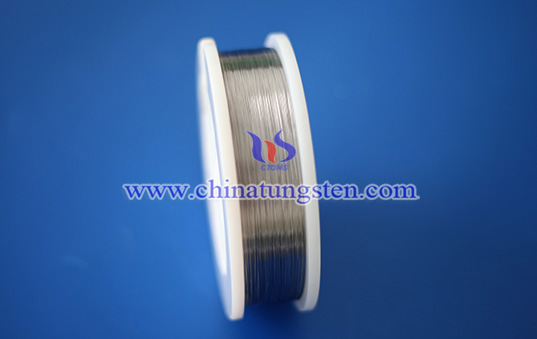
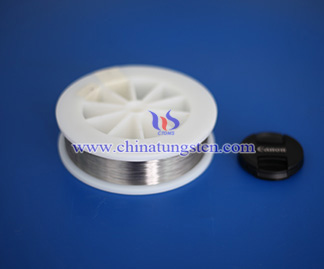
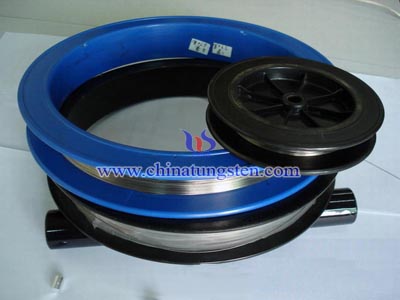
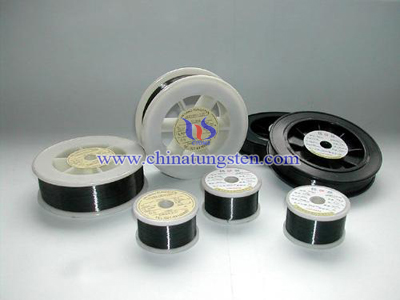
Cleaned tungsten wire is produced by chemically or electrolytically treating black tungsten wire to remove surface oxide layers (WO₂/WO₃) and processing residues, resulting in a high-cleanliness tungsten wire with a metallic surface. It is suitable for applications requiring high cleanliness and operational stability. CTIA maintains consistent surface quality and dimensional accuracy through controlled cleaning and post-treatment processes, ensuring compliance with diverse application requirements.
1. Surface Condition of Cleaned Tungsten Wire
Cleaned tungsten wire is produced by electrolytic cleaning or acid washing of black tungsten wire, removing surface oxide layers and adhered impurities, resulting in a silver-gray metallic appearance. This process mainly affects the surface layer without altering the bulk microstructure or intrinsic material properties. After cleaning, the surface exhibits high cleanliness with minimal oxides or contaminants, improving electrical contact stability and electron emission consistency. It reduces interface uncertainty and improves operational reliability in electron emission and precision contact applications. CTIA ensures surface quality meets diverse application requirements through standardized cleaning and inspection processes.
2. Properties of Cleaned Tungsten Wire
The internal material remains a tungsten-based system, retaining its high melting point, high density, and excellent electrical conductivity. Since no additional alloying elements are introduced, its properties are primarily determined by the purity of the original material and processing conditions. Through controlled raw materials and processing techniques, uniform microstructure and stable performance can be maintained.
3. Specifications of Cleaned Tungsten Wire
The typical diameter range is φ0.02 mm to φ3.0 mm:
3.1 φ0.02–0.1 mm: used for precision electron emission, fine heating elements, and micro-structural components.
3.2 φ0.1–1.0 mm: used for electronic devices, electrodes, and heating structures.
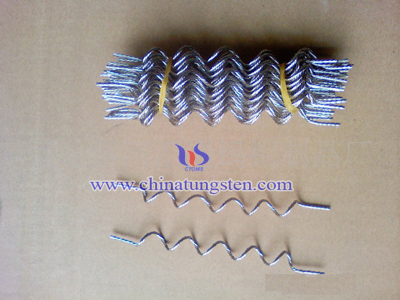
3.3 above φ1.0 mm: used for high-temperature support, load-bearing, and structural components.
Dimensional accuracy is primarily controlled through a multi-pass wire drawing process. While cleaning has no significant impact on dimensions, it improves surface roughness and overall cleanliness. CTIA implements strict inspection of diameter tolerance and roundness to ensure consistent quality and reliable usability.
4. Applications of Cleaned Tungsten Wire
Cleaned tungsten wire is mainly used in environments requiring high surface cleanliness, emission stability, or vacuum compatibility:
4.1 Electron Emission Components
Used as a thermionic emission source, releasing electrons under heating conditions for vacuum tubes and related electronic devices.
4.2 Vacuum Heating Elements
Used as heating wires in high-vacuum environments of approximately 10⁻⁴–10⁻⁶ Pa, with low outgassing and stable operational performance.
4.3 Evaporation Coating Materials
Used as heating or evaporation carriers in vacuum deposition processes, reducing the impact of impurities on thin-film quality.
4.4 High-Cleanliness Structural Components
Used as support or functional parts in high-temperature systems sensitive to contamination.
The advantages of cleaned tungsten wire are primarily reflected in superior surface cleanliness and stable operational performance, making it well-suited for electronic, vacuum, and high-purity applications. For sourcing decisions, CTIA recommends prioritizing operating temperature, vacuum level, and cleanliness requirements, alongside diameter tolerance and batch-to-batch consistency, as these factors directly influence system stability and service life.
For any inquiry, please contact tungsten wire manufacturer: CTIA GROUP
Email: sales@chinatungsten.com
Tel: 0086 592 5129696 / 0086 592 5129595
Website: www.tungsten.com.cn
WeChat:

Related Products: