Industrial Tungsten Wire
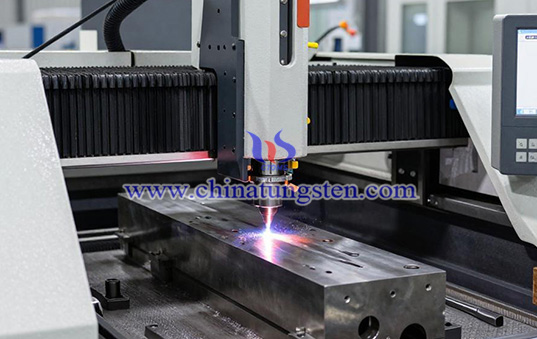
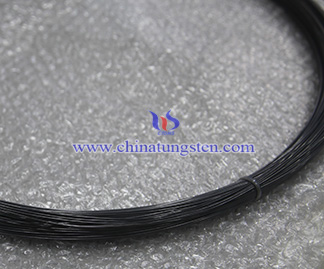
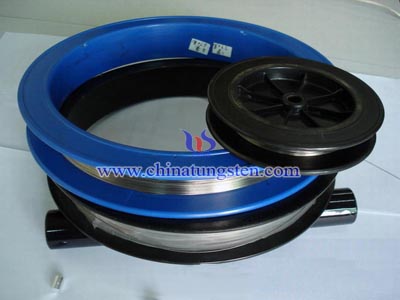
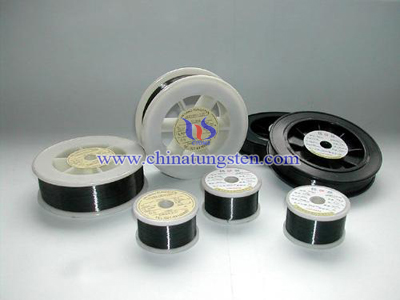
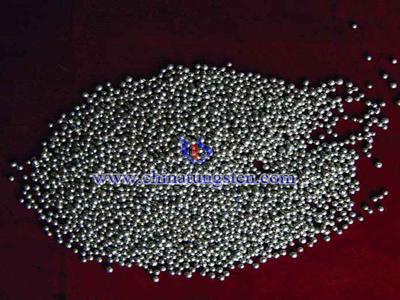
CTIA's industrial tungsten wire refers to tungsten wire used in industrial applications. CTIA GROUP observes that purchasers are typically concerned with practical factors such as maximum operating temperature, deformation during use, service life, and batch-to-batch consistency, all of which directly affect equipment continuity and maintenance costs.
Most high-temperature equipment operates within 1800–3000°C under vacuum or inert atmospheres approximately 10⁻³–10⁻⁵Pa. Under such conditions, materials must resist deformation and avoid rapid evaporation that would shorten service life. Tungsten shows relatively low consumption and minimal dimensional change during temperature fluctuations, enabling long-term use in high-temperature equipment, with a melting point of about 3422°C, a vapor pressure of about 10⁻³–10⁻²Pa in the range of 2500–3000K, and a coefficient of thermal expansion of about 4.5×10⁻⁶K⁻¹.
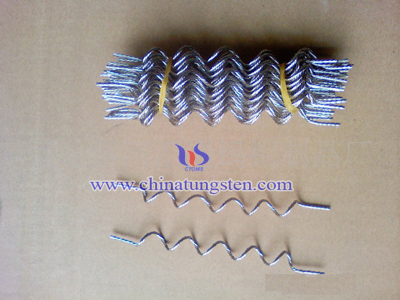
Industrial tungsten wire may function as a heating element or serve a structural role. When energized, it generates heat through electrical resistance, with resistivity changing steadily with temperature, allowing controlled heating power. When not energized, it must maintain its shape at high temperatures without significant sagging or deformation.
Wire specification also affects performance. Larger diameters generally provide higher load capacity and longer service life, while finer wires heat up more quickly and are suitable for applications requiring fast response. Structurally, tungsten wire can be configured as straight, coiled, or mesh forms, each corresponding to different heating methods and temperature distributions.
The operating environment is also critical. Tungsten is prone to oxidation at high temperatures and is therefore typically used in vacuum or inert gas environments. Surface contamination or oxides may alter local heating behavior and affect overall stability, so cleaning or heat treatment is usually required before use.
Based on CTIA GROUP’s customer service experience, different equipment places emphasis on different performance aspects. Heat treatment equipment prioritizes long-term stability, evaporation coating equipment focuses on evaporation behavior and heating uniformity, and high-temperature experimental systems require faster thermal response and precise temperature control. Therefore, material selection should match operating temperature, power requirements, and structural design.
For any inquiry, please contact tungsten wire manufacturer: CTIA GROUP
Email: sales@chinatungsten.com
Tel: 0086 592 5129696 / 0086 592 5129595
Website: www.tungsten.com.cn
WeChat:

Related Products: