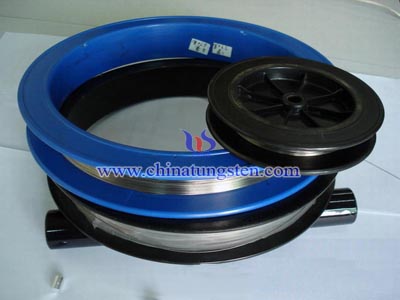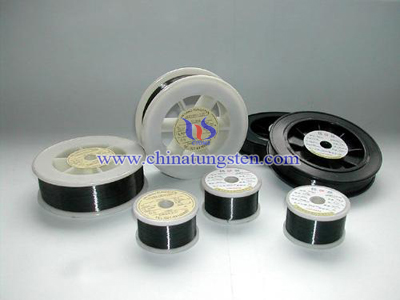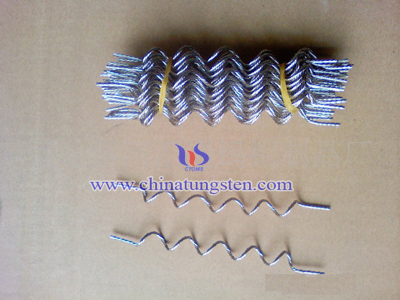
Tungsten Alloy Wire
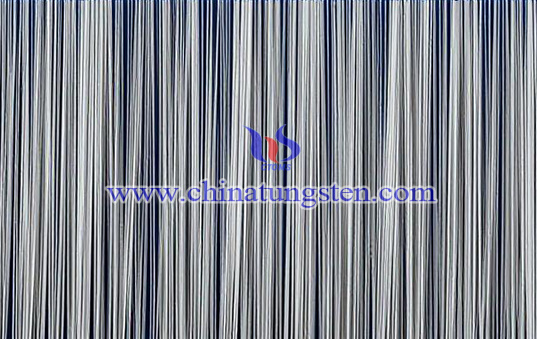
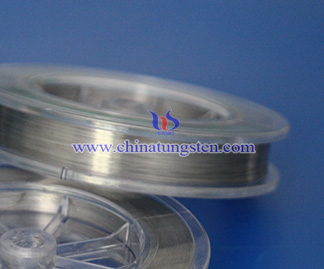
From CTIA’s manufacturing perspective, tungsten alloy wire is based on tungsten and produced by introducing alloying elements such as Re, Mo, and Ta to form multi-component systems. The primary goal is to retain tungsten’s high melting point while enabling targeted adjustment of mechanical properties and in-service performance. Compared with pure tungsten wire, tungsten alloy wire does not rely solely on the base material; instead, the synergistic effect of alloying elements improves specific properties such as ductility, high-temperature strength, and resistance to thermal shock, making it more suitable for demanding operating conditions.
The meaning of tungsten alloy wire is relatively broad. It is sometimes used as a general term for all non-pure tungsten wires. And it may specifically refer to tungsten wires alloyed with metallic elements forming solid solutions.
1. Typical Alloy Systems of Tungsten Alloy Wire
Tungsten alloy wire is usually classified according to specific alloy systems, among which tungsten-rhenium (W-Re) is one of the most mature and widely used. Common compositions include WRe3, WRe5, and WRe25. These materials exhibit good ductility at lower temperatures along with strong resistance to thermal shock, making them suitable for thermocouples, aerospace, and precision sensors. In addition to tungsten rhenium wire, there are tungsten molybdenum wires and tungsten tantalum wires, which are typically used in specialized high-temperature or structural applications, offering targeted advantages in high-temperature strength and structural stability.
2. Definition of Tungsten Alloy Wire Classification
A key characteristic of tungsten alloy wire is that alloying elements exist in solid solution form, modifying tungsten properties through alloy strengthening mechanisms. This distinguishes it from other tungsten wire types. It should be noted that not all modified tungsten wires fall into this category. For example, doped tungsten wire achieves performance improvement through K-Al-Si trace elements forming bubble structures that inhibit grain boundary movement, which differs from alloying. Rare earth tungsten wire relies on Oxide Dispersion Strengthening (ODS), and therefore is not considered a conventional alloy system.
3. Applications of Tungsten Alloy Wire
The performance of tungsten alloy wire depends on the specific alloy system, but overall it is characterized by directional property adjustment through alloying. For applications requiring improved ductility and thermal shock resistance, tungsten rhenium wires are typically selected. For high-temperature structural or heating environments, tungsten molybdenum wires or tungsten tantalum wires can be chosen accordingly. Rather than enhancing all properties, tungsten alloy wire is optimized for specific service conditions.
Tungsten alloy wire is a tungsten-based material strengthened through metallic alloying elements and is used as a broad term in the industry, while in practice it is usually specified by precise alloy systems. From CTIA’s manufacturing and supply experience, the key lies in composition control and process matching. Different alloy systems require tailored control of powder purity, alloy ratios, as well as sintering and wire drawing processes. Parameters such as wire diameter, tolerance, mechanical properties, and batch consistency must be controlled to meet the requirements of high-temperature, vacuum, or precision environments. It is also necessary to balance performance consistency with process feasibility to ensure alignment between material properties and application processes.
For any inquiry, please contact tungsten wire manufacturer: CTIA GROUP
Email: sales@chinatungsten.com
Tel: 0086 592 5129696 / 0086 592 5129595
Website: www.tungsten.com.cn
WeChat:

Related Products: