CTIA's Tungsten Wire in High-Temperature Heating and Evaporation Coating
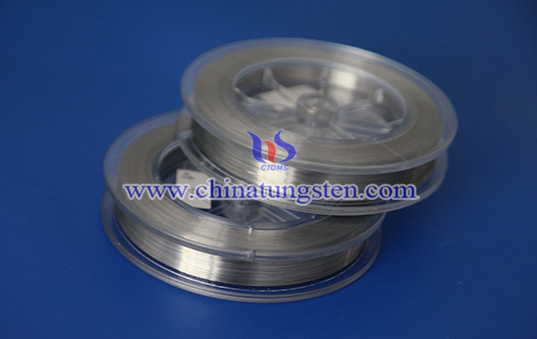
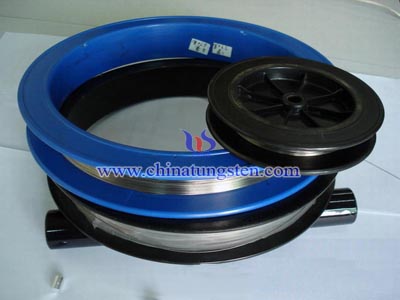
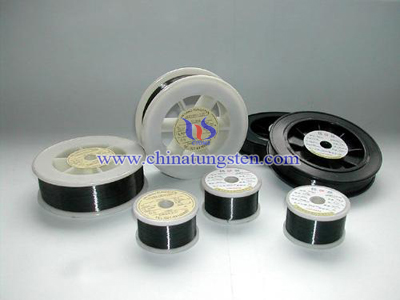
CTIA's tungsten wire is widely used in high-temperature heating and evaporation coating processes due to its high melting point, excellent creep resistance, and stable resistivity. Tungsten wire is produced through precision processes including powder metallurgy, hot isostatic pressing, annealing, and Multi-Pass Cold Drawing (MPCD), ensuring uniform diameter, smooth surface, and stable mechanical properties. It can operate stably for long periods under complex conditions such as vacuum evaporation, thin film deposition, and industrial high-temperature processing. The following describes the applications and performance advantages of tungsten wire in high-temperature heating and evaporation coating.
1. CTIA's Tungsten Wire for High-Temperature Heating Elements
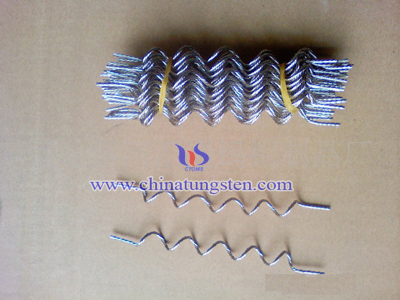
Tungsten wire is mainly used as a heating element in industrial high-temperature heating applications. Its high melting point and low creep characteristics ensure long-term dimensional stability and resistivity consistency at elevated temperatures.
Tungsten heating wires operate at 2500–2800K while withstanding thermal cycling and localized thermal stress from current concentration in resistance furnaces, vacuum heat treatment furnaces, and electron beam heating furnaces. Its creep resistance and high tensile strength of approximately 800–1000MPa enable stable geometry and uniform current distribution under long-term high-temperature conditions.
CTIA control the grain size and densification of tungsten wire, improving high-temperature mechanical performance and thermal conductivity uniformity. And tungsten wire is used as heating wires for vacuum heat treatment furnaces, industrial resistance furnace heating elements, and support and temperature control components in electron beam evaporation furnaces, ensuring heating uniformity, extended service life, and reduced maintenance cost.
2. CTIA's Tungsten Wire for Vacuum Evaporation Coating
Tungsten wire operates under high vacuum (10⁻³–10⁻⁷Pa) and high temperature (~2500K) in vacuum evaporation coating processes, while also experiencing localized current concentration and thermal cycling stress. Its low vapor pressure (below 10⁻⁷Pa at 2500K) ensures minimal material loss in high-temperature vacuum environments, making it suitable as evaporation source heating wire and thin film support wire.
CTIA's tungsten wire is processed through high densification, annealing, and precision surface treatment, achieving uniform diameter, smooth surface, and diameter tolerance controlled within ±0.001mm.
Tungsten wire is used in optical film evaporation, ITO (Indium Tin Oxide) transparent conductive films, electronic device thin films, metal film evaporation, solar thin film modules, OLED (Organic Light-Emitting Diode) display manufacturing, and vacuum coating production lines, ensuring film thickness uniformity and low surface defects, improving process efficiency and precision.
3. CTIA's Tungsten Wire for Electronic Device Thin Film Deposition
Tungsten wire is used as heating and support elements in microelectronics and integrated circuit thin film deposition. Its high thermal conductivity of approximately 173W/(m·K) and low vapor pressure ensure uniform temperature distribution and stable current during deposition, enabling precise film thickness control.
CTIA optimizes grain structure through hot isostatic pressing and annealing, improving thermal conductivity, creep resistance, and mechanical strength, allowing stable dimensions under high vacuum and high temperature (2500–2700K).
Tungsten wire is used in microelectronic device evaporation films, thin film resistor fabrication, and electron beam evaporation systems, ensuring film uniformity, thickness accuracy, and surface flatness for reliable electronic device manufacturing.
4. CTIA's Tungsten Wire for Metal and Optical Thin Film Fabrication
Tungsten wire is used as evaporation heating elements and support wires under high thermal cycling and localized current concentration in metal and optical thin film manufacturing.
Its fine grain structure and high densification help prevent creep, deformation, or fracture at high temperature, making it widely used in vacuum deposition of aluminum, copper, and nickel films, as well as optical reflective coatings, anti-reflective coatings, and protective films.
High-purity tungsten wire improves temperature distribution uniformity during heating, reduces local overheating, and helps minimize film thickness deviation, influencing reflectivity, transmittance, and adhesion stability of optical coatings.
5. CTIA's Tungsten Wire for Precision Thin Film Deposition
Tungsten wire is used as evaporation source heating elements and support structures in precision thin film deposition, participating in evaporation rate control.
This process operates under high temperature and vacuum conditions, requiring stable heating behavior and continuous evaporation performance. Tungsten wire provides high melting point, low vapor pressure, and good thermal conductivity, maintaining structural stability in both electron beam evaporation and thermal evaporation processes.
Material purity, diameter consistency, and surface condition affect evaporation stability, impurity incorporation, and film defects. Therefore, consistency requirements are critical in optical-electronic films, ITO conductive films, transparent films, reflective films, and metal nanofilms, influencing thickness control and process repeatability. CTIA controls composition, multi-pass cold drawing, and surface annealing to ensure dimensional consistency and surface stability.
6. CTIA's Tungsten Wire for High-Vacuum Electron Beam Heating
High-vacuum electron beam evaporation systems operate at approximately 2500–3000K and 10⁻⁶–10⁻⁷Pa, requiring high thermal stability, low evaporation loss, and structural reliability of heating elements.
Tungsten wire provides high melting point, low vapor pressure, and sufficient high-temperature strength, meeting basic requirements for such conditions, typically serving as heating elements and support structures.
In operation, grain structure, densification, and surface condition affect resistivity stability and service life, and may influence heating uniformity and localized overheating, thereby affecting evaporation continuity and repeatability. CTIA controls microstructure and performance stability through grain regulation and annealing processes.
7. CTIA's Tungsten Wire for High-Temperature Scientific Research
High-temperature scientific experiments are conducted under high temperature and high vacuum conditions, requiring geometric stability, electrical stability, and repeatable performance of heating elements.
Tungsten wire offers high melting point, low vapor pressure, and relatively stable electrical properties, and can be used as heating source and support element at approximately 2500K and 10⁻⁷Pa conditions.
Diameter consistency and microstructure influence heating uniformity and experimental repeatability. CTIA uses multi-pass drawing and annealing processes to control dimensional consistency and structure stability, enabling applications in nanomaterial synthesis, thin film device research, and high-temperature physics experiments.
CTIA's tungsten wire is manufactured using high-purity raw materials through powder metallurgy densification, hot isostatic pressing, and multi-pass cold drawing. Under high-temperature and vacuum conditions, these processes require strict control of dimensional consistency, structural stability, and evaporation behavior. Its high melting point, low vapor pressure, and low thermal expansion enable compatibility with such environments, contributing to heating stability and process repeatability.
For any inquiry, please contact tungsten wire manufacturer: CTIA GROUP
Email: sales@chinatungsten.com
Tel: 0086 592 5129696 / 0086 592 5129595
Website: www.tungsten.com.cn
WeChat:

Related Products: